Table of Contents
Written and medically reviewed by Sean E. Mazloom, MD, FAAD
Double Board-Certified Dermatologist and Mohs Surgeon · Cosmetic & Laser Expert
The Short Answer
For most patients with sun damage, brown spots and uneven skin tone, there is no single universal ‘best’ laser. The best treatment depends on whether the main concern is a few discrete sun spots, diffuse blotchy pigmentation, redness, rough texture, enlarged-looking pores, fine lines or a combination of these. IPL, nanosecond Q-switched KTP and Q-switched Nd:YAG lasers, the 1927-nm and 1550-nm wavelengths in Fraxel Dual®, and fractional CO2 resurfacing each have different roles.
At REJUVA Dermatology, Vein & Cosmetic Center in Venice, Florida, we offer multiple complementary pigment and resurfacing technologies, including nanosecond QS-KTP and QS-Nd:YAG. These can be used as standalone treatments for selected benign pigmented lesions or combined strategically with IPL, Fraxel Dual® and other modalities when sun damage includes several different components. The goal is to match the technology—or combination of technologies—to the patient’s actual pigment pattern, skin type, texture and downtime goals.
Why Florida Sun Damage Often Needs More Than Spot Treatment
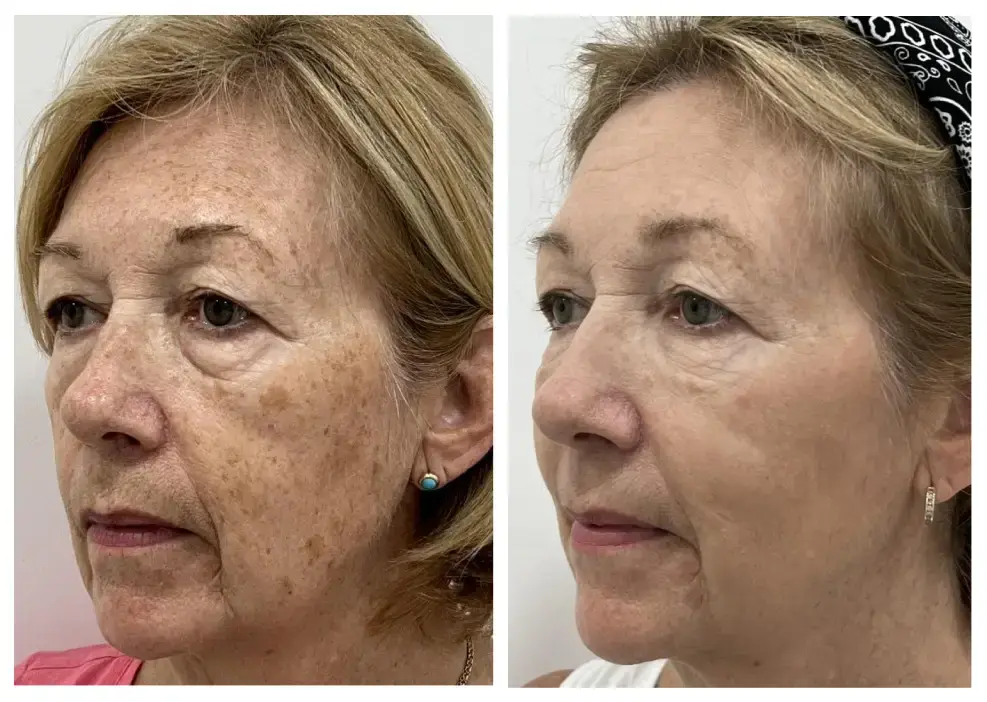
Years of ultraviolet exposure can create solar lentigines (commonly called sun spots or age spots), freckles, blotchy pigmentation, redness, visible capillaries, roughness and collagen loss. These changes commonly appear together on the face, neck, chest and hands. That is why a patient who searches for the “best laser for brown spots” may actually need treatment for several different components of photodamage.
A cosmetic consultation should answer four questions before a device is selected:
- Is the discoloration truly a benign sun spot, or could it represent another pigment condition that needs medical evaluation?
- Is the pigment isolated or spread diffusely across a larger area?
- Are redness, broken capillaries, rough texture, pores or fine lines also present?
- What treatment intensity and downtime fit the patient’s skin type, season, schedule and goals?
First: Make Sure a Brown Spot Is Safe to Treat Cosmetically
Not every brown spot is a cosmetic sun spot. Lentigo maligna, an early form of melanoma, and other skin cancers can sometimes resemble benign pigmentation. Treating an undiagnosed suspicious lesion with a cosmetic laser or light device can alter its appearance and potentially delay diagnosis. This is an important advantage of having pigment evaluated in a dermatology practice before cosmetic treatment, particularly when a spot is new, changing, irregular, unusually dark or different from surrounding lesions.
Which Treatment Is Best for Sun Damage?
IPL: Often Best When Brown Spots Come with Redness
Intense pulsed light (IPL), sometimes called a photofacial, is technically a light-based treatment rather than a laser. It can target both melanin in brown spots and hemoglobin in superficial red vessels. This makes IPL especially useful for patients with mottled pigmentation, sun spots, facial redness and small visible vessels occurring together.
A systematic review found IPL effective across several signs of photoaging, including lentigines, hyperpigmentation, erythema and telangiectasias. A more recent systematic review of clinical trials for solar lentigines reported substantial improvement with IPL in the studies reviewed. IPL generally involves relatively little downtime, although treated brown spots may temporarily darken before flaking or fading.
IPL may be a particularly good fit when your main goal is a clearer, more even-looking complexion and your skin also has red discoloration. It is less comprehensive than fractional resurfacing when texture, pores and fine lines are major concerns.
1927-nm Fractional Laser: A Strong Choice for Diffuse Brown Pigment and Uneven Tone
The 1927-nm thulium fractional wavelength deserves special attention for patients whose sun damage is spread across the skin rather than limited to a few isolated spots. The wavelength targets water relatively superficially in the skin and creates microscopic treatment zones, making it useful for epidermal and superficial photodamage while preserving surrounding untreated tissue.
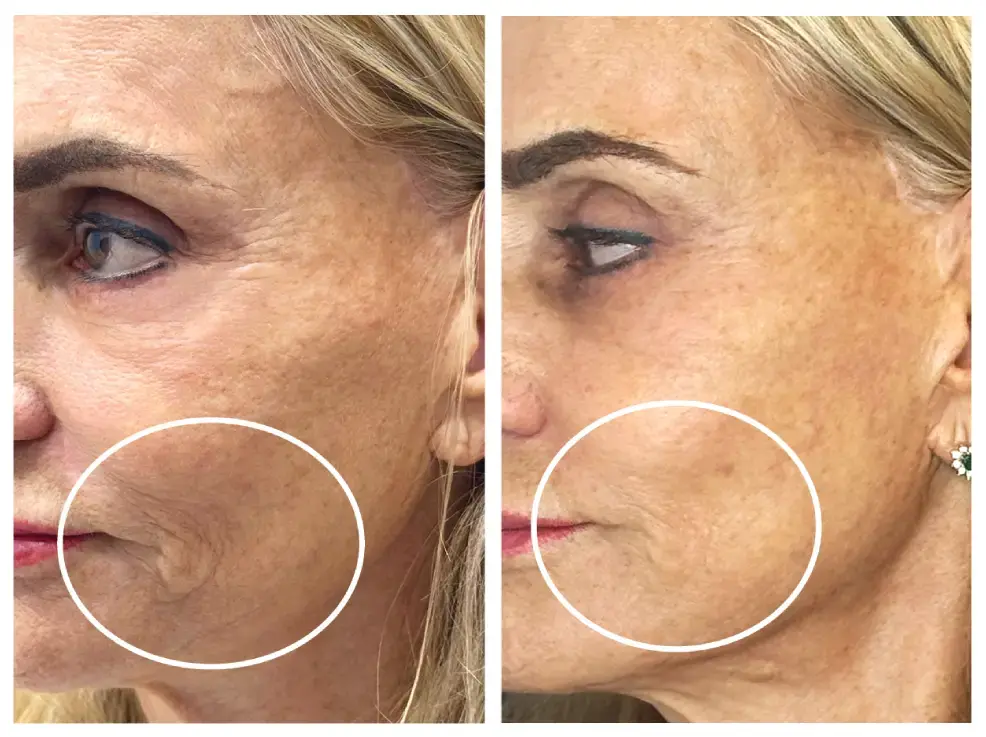
Clinical studies of fractional 1927-nm treatment have shown improvement in brown spots, UV-visible spots, dyspigmentation and overall photodamage. In practical terms, this is why the 1927-nm component of Fraxel Dual® can be an excellent option for patients who describe their skin as “blotchy,” “sun damaged,” “dull” or uneven rather than simply pointing to one or two isolated spots.
Fraxel Dual® 1550/1927: When Pigment and Texture Need to Be Treated Together
Fraxel Dual® combines two complementary fractional wavelengths. The 1927-nm wavelength is well suited to superficial photodamage and uneven pigmentation, while the 1550-nm wavelength reaches more deeply and is commonly used to improve textural irregularity, fine lines and the appearance of pores through collagen remodeling.
This makes a dual-wavelength fractional strategy attractive for patients who want more than pigment removal. If your goals include brighter tone, smoother texture, softer fine lines and less visible pores, fractional resurfacing may provide a broader rejuvenation benefit than treating individual brown spots alone. Treatment plans can emphasize one wavelength or combine them depending on the skin findings and desired downtime.
IPL vs. Fraxel Dual®: Which Is Better for Sun Damage?
Neither is automatically better. They solve somewhat different problems. IPL is especially useful when brown pigmentation is mixed with redness and visible superficial vessels. Fraxel Dual® is particularly useful when uneven pigmentation is mixed with rough texture, fine lines, enlarged-looking pores or broader photodamage. Many patients have both patterns, so the treatments may be used in a staged or combination plan rather than viewed as competitors.
Fractional CO2: When Sun Damage Is Accompanied by Deeper Lines and More Advanced Photoaging
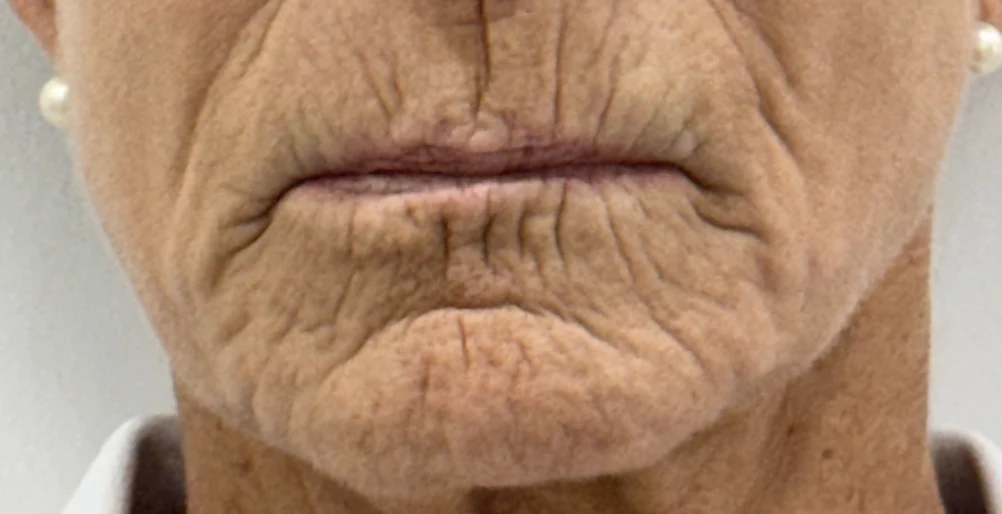
Fractional CO2 resurfacing is a more intensive option for patients with substantial photodamage, deeper etched lines, significant textural change or more advanced skin aging. CO2 treatment removes microscopic columns of damaged tissue and produces stronger collagen remodeling than gentler nonablative approaches. The trade-off is more recovery time, more redness and a greater need for careful patient selection and aftercare.
For someone primarily bothered by mild brown spots with little texture change, CO2 may be more treatment than necessary. For a patient seeking a larger resurfacing effect and willing to accept downtime, it may be appropriate. The goal is to match treatment intensity to the problem rather than automatically choosing the strongest device.
Nanosecond QS-KTP and QS-Nd:YAG: Targeted Treatment for Individual Brown Spots
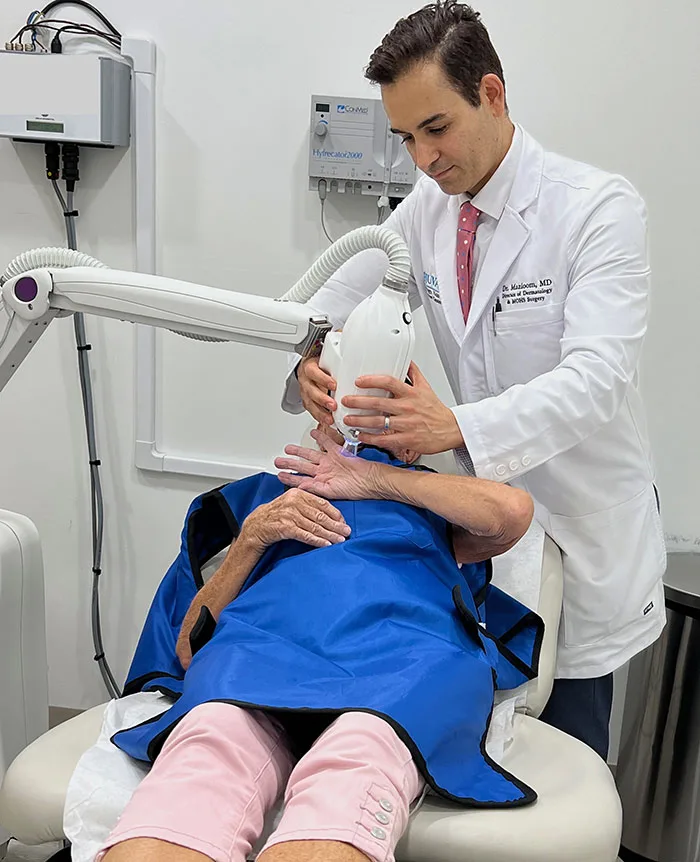
When the main concern is a limited number of distinct, dermatologist-confirmed benign brown spots, a pigment-specific Q-switched laser can be an excellent targeted option. REJUVA offers both nanosecond Q-switched KTP and Q-switched Nd:YAG technology. The 532-nm QS-KTP wavelength is strongly absorbed by melanin and is particularly useful for selected superficial epidermal pigment such as solar lentigines and freckles. The 1064-nm QS-Nd:YAG wavelength penetrates more deeply and can play a role in selected pigment concerns where a longer wavelength is appropriate. Published studies support nanosecond 532/1064-nm Q-switched systems for benign hyperpigmentation, while also emphasizing careful patient selection because post-inflammatory hyperpigmentation can occur, particularly after 532-nm treatment in susceptible skin.
Dr. Mazloom performing Qswitch Laser.mov
QS-KTP or QS-YAG vs. IPL or Fraxel Dual®: Why Combination Treatment Can Be Better
The important distinction is targeted spot treatment versus field treatment. Nanosecond QS-KTP and QS-Nd:YAG can precisely target selected individual pigmented lesions. IPL is often more useful when discoloration is diffuse and accompanied by redness or superficial vessels. Fraxel Dual®, particularly the 1927-nm wavelength, treats a broader field of photodamaged skin and can improve diffuse dyschromia, while the 1550-nm wavelength adds deeper fractional remodeling for texture, pores and fine lines.
For many patients, these technologies are complementary rather than competing. A customized REJUVA plan may use QS-KTP or QS-Nd:YAG as a standalone treatment when only a few discrete spots need attention, or combine targeted Q-switched treatment with IPL or fractional resurfacing when stubborn focal spots coexist with broader sun damage. Combination treatment does not mean every patient needs every device; it means each component of photodamage can be addressed with the modality best suited to it.
What About Melasma? It Is Not the Same as Ordinary Sun Damage
Melasma deserves a separate discussion because it behaves differently from solar lentigines. It is a chronic pigment disorder influenced by ultraviolet and visible light, hormones, heat and individual susceptibility. Aggressive energy treatment can trigger rebound pigmentation in some patients. For that reason, a brown patch should not automatically be treated as a sun spot.
When melasma is suspected, the plan often emphasizes strict photoprotection and topical therapy first, with procedures selected cautiously. Correct diagnosis matters more than simply choosing a stronger laser.
Can Darker Skin Tones Be Treated for Brown Spots and Uneven Tone?
Yes, but treatment selection and settings require additional care because skin with more baseline melanin has a higher risk of post-inflammatory hyperpigmentation after heat or inflammation. The safest plan depends on the exact diagnosis, skin phototype, recent tanning, treatment area and device. In some patients, a gentler fractional approach, topical pigment control or a staged treatment plan is preferable to aggressive pigment targeting.
How Many Treatments Are Usually Needed?
The answer depends on the device and the severity of photodamage. IPL and nonablative fractional resurfacing are commonly performed as a series rather than as a one-time treatment. Fractional CO2 is more often selected when a patient wants a stronger resurfacing treatment with greater downtime. Maintenance may be helpful because treatment can improve existing photodamage, but it cannot prevent new ultraviolet exposure from creating future pigment changes.
What Areas Can Be Treated?
The face is the most common treatment area, but sun damage frequently extends to the neck, chest and hands. These areas do not all heal identically, so settings and treatment intensity should be adjusted by location. The chest in particular often shows a combination of brown pigment, redness and textural change, making a customized approach useful.
How We Choose a Laser or Light Treatment at REJUVA
Our goal is not to name one device the winner. It is to identify what is actually creating the uneven appearance and then match the treatment to it. A typical plan considers:
- Brown spots and diffuse pigmentation: IPL and/or the 1927-nm fractional wavelength may be emphasized, while nanosecond QS-KTP or QS-Nd:YAG can be added for selected discrete or resistant benign pigmented lesions.
- Brown spots plus facial redness or small vessels: IPL may address both color problems in the same treatment plan.
- Uneven tone plus rough texture, pores or fine lines: Fraxel Dual® 1550/1927 can address multiple components of photoaging.
- More advanced wrinkles and textural damage: fractional CO2 resurfacing may be considered when greater correction is worth greater downtime.
- Possible melasma or higher pigment risk: treatment is made more conservative and may begin with medical pigment control rather than aggressive laser treatment.
Because REJUVA offers multiple laser and light platforms—including nanosecond QS-KTP, QS-Nd:YAG, IPL, Fraxel Dual® 1550/1927 and fractional CO2—recommendations can be based on the patient’s skin and goals rather than on a need to use one particular machine. Targeted Q-switched treatment may be used alone or layered into a broader combination plan when appropriate.
How to Protect Your Results
- Use broad-spectrum sunscreen every day and reapply when outdoors. Continued UV exposure can create new pigmentation even after an excellent treatment response.
- Avoid intentional tanning before treatment. Recently tanned skin can increase the risk of unwanted pigment changes.
- Use prescribed pigment-control skincare when recommended. Pre- and post-treatment topical therapy may be appropriate for selected patients.
- Follow the specific aftercare instructions for your procedure. IPL, nonablative fractional resurfacing and CO2 resurfacing have different recovery needs.
- Think long term. In sunny Southwest Florida, maintenance treatment and consistent photoprotection are often more realistic than expecting one procedure to permanently erase future sun damage.
Frequently Asked Questions
What Is the Best Laser for Brown Spots on the Face?
For widespread sun-related brown spots, the best choice is often IPL or a 1927-nm fractional laser depending on whether redness, texture and fine lines are also present. For a few well-defined benign sun spots, nanosecond QS-KTP or QS-Nd:YAG may provide more targeted treatment. In patients with both focal spots and diffuse photodamage, these approaches can be combined.
Is IPL or Fraxel Dual® Better for Brown Spots?
IPL is often favored when brown spots occur with redness or visible vessels. Fraxel Dual®, particularly its 1927-nm wavelength, is often favored when pigment is diffuse and accompanied by rough texture, fine lines or pores. Some patients benefit from both approaches at different points in the treatment plan.
Is a Q-Switched Laser or IPL Better for Brown Spots?
It depends on the pattern. Nanosecond QS-KTP or QS-Nd:YAG is often most useful when treating selected individual benign pigmented lesions precisely. IPL is often better suited to a larger field of sun damage, especially when brown discoloration is mixed with redness or visible vessels. Some patients benefit from using both approaches in the same overall treatment plan.
What Is the Role of QS-KTP for Sun Spots?
QS-KTP at 532 nm targets superficial melanin and can be very effective for selected solar lentigines and freckles. Because 532-nm energy also interacts strongly with epidermal melanin, careful skin-type assessment, conservative settings and sun avoidance are important to reduce the risk of post-inflammatory hyperpigmentation.
Why Would QS-Nd:YAG Be Used for Pigmentation?
The 1064-nm QS-Nd:YAG wavelength penetrates more deeply and interacts less strongly with epidermal melanin than 532 nm. It can therefore be useful for selected pigment patterns and skin types when a longer wavelength is appropriate. The correct wavelength and settings depend on the diagnosis, pigment depth and baseline skin tone.
Does Fraxel Dual® Help Sun Spots and Uneven Skin Tone?
Yes. The 1927-nm fractional wavelength has published evidence for improving photodamage and dyspigmentation, including brown and UV-visible spots. The 1550-nm wavelength can complement it when deeper texture and collagen remodeling are also goals.
Can IPL Remove Age Spots?
IPL can significantly improve many solar lentigines and diffuse sun-related pigmentation, especially when the skin also has redness. Treated spots often darken temporarily before they lighten or shed.
What Treatment Is Best for Sun Damage on the Chest?
The chest commonly has a mixture of brown spots, redness and texture change. IPL can be useful when color is the dominant problem, while fractional 1927-nm treatment can help broader photodamage and texture. Treatment intensity must be adjusted because the chest heals differently from the face.
Can Laser Treatment Make Pigmentation Worse?
Yes. Post-inflammatory hyperpigmentation can occur after laser or light treatments, particularly with aggressive settings, recent tanning, darker skin phototypes or pigment disorders such as melasma. Accurate diagnosis, conservative settings when appropriate and good aftercare reduce risk.
How Much Downtime Is There?
IPL usually has little social downtime, although pigment may temporarily darken. Nonablative fractional treatment commonly causes several days of redness, swelling or a rough bronzed appearance. Fractional CO2 requires more recovery and is chosen when the potential resurfacing benefit justifies that downtime.
Should I Treat Brown Spots Before or After a Skin Cancer Screening?
Suspicious or changing pigmented lesions should be medically evaluated before cosmetic treatment. If you have significant sun exposure or multiple atypical spots, combining cosmetic planning with a dermatologic skin examination can help make sure lesions that require biopsy are not simply treated as cosmetic pigment.
Laser Treatment for Sun Damage in Venice and Sarasota, Florida
If you are searching for the best laser for sun damage, brown spots or uneven skin tone in Venice, Wellen Park, North Port, Englewood, Nokomis, Osprey, Sarasota or surrounding Southwest Florida communities, the most useful first step is an evaluation of the pigment itself. At REJUVA Dermatology, Vein & Cosmetic Center, we can determine whether IPL, Fraxel Dual® 1550/1927, fractional CO2 resurfacing or a customized combination is most appropriate for your skin and goals.
Schedule a cosmetic laser consultation to develop a treatment plan based on your pigment pattern, skin type, desired downtime and the other signs of photoaging you would like to improve. You can also call (941) 529-0070.
About the Author
Sean E. Mazloom, MD, FAAD — Double Board-Certified Dermatologist and Mohs Surgeon · Cosmetic & Laser Expert. Dr. Mazloom treats medical and cosmetic skin concerns at REJUVA Dermatology, Vein & Cosmetic Center and has expertise in laser and energy-based skin rejuvenation, fractional resurfacing and dermatologic surgery.
This article is for educational purposes and is not a substitute for an in-person medical evaluation. Individual treatment recommendations vary.
References
1. Wat H, Wu DC, Rao J, Goldman MP. Application of intense pulsed light in the treatment of dermatologic disease: a systematic review. Dermatol Surg. 2014;40(4):359-377.
2. Barikbin B, et al. Intense Pulsed Light on skin rejuvenation: a systematic review. Lasers Med Sci. 2022;37:831-841.
3. Goldman MP, Weiss RA, Weiss MA. Intense pulsed light as a nonablative approach to photoaging. Dermatol Surg. 2005;31:1179-1187.
4. Treatment of Solar Lentigines: A Systematic Review of Clinical Trials. J Cosmet Dermatol. 2025. PMID: 40145274.
5. Investigating the efficacy of a fractionated 1927 nm laser for diffuse dyspigmentation and actinic changes. Lasers Surg Med. 2023. PMID: 36950878.
6. Brauer JA, et al. Nonablative 1927 nm fractional resurfacing for the treatment of facial photopigmentation. J Drugs Dermatol. 2015.
7. Polder KD, et al. 1,927-nm fractional thulium fiber laser for the treatment of nonfacial photodamage: a pilot study. Dermatol Surg. 2011;37:342-348.
8. Levy T, et al. Expert consensus on clinical recommendations for fractional ablative CO2 laser in facial skin rejuvenation. Lasers Surg Med. 2025.
9. Soares I, et al. Complications of dermatologic lasers in high Fitzpatrick phototypes and management. Lasers Med Sci. 2024.
10. Gan C, Rodrigues M. An update on new and existing treatments for the management of melasma. Am J Clin Dermatol. 2024.
11. Vachiramon V, Iamsumang W, Triyangkulsri K. Q-switched double-frequency Nd:YAG 532-nm nanosecond laser vs. 532-nm picosecond laser for solar lentigines in Asians. Lasers Med Sci. 2018. PMID: 29948457.
12. Cannarozzo G, et al. Nanosecond Q-switched 1064/532-nm laser to treat hyperpigmentations: a double-center retrospective study. Medicina (Kaunas). 2021. PMID: 34698132.
13. Kang HJ, et al. Postinflammatory hyperpigmentation associated with treatment of solar lentigines using a Q-switched 532-nm Nd:YAG laser: a multicenter survey. J Dermatolog Treat. 2018. PMID: 27786580.