By Sean E. Mazloom, MD, FAAD, Double Board-Certified Dermatologist and Mohs Surgeon
Medically reviewed by Golta Rasouli, MD · Last updated October 2026
Table of Contents
Quick Answer
The best treatment depends on what is causing the lines. Crow’s feet that appear when you smile respond best to a neuromodulator such as Botox or Xeomin. Crepey eyelid skin and fine lines that stay at rest respond best to fractional laser, such as Dual Frax, or CO2 for deeper lines, and to radiofrequency. Hollows need filler, and heavy or bulging eyelids need surgery. Most people get the best result from a combination.
Key Takeaways
- Crow’s feet, crepey eyelid skin, under-eye hollows and discoloration are different problems, and each responds to a different treatment.
- Neuromodulators soften lines caused by squinting and smiling, but they do not repair thin, crepey skin.
- Fractional lasers are considered the gold standard for resurfacing the skin around the eyes. Non-ablative Dual Frax offers gentle, gradual improvement with little downtime. CO2 and Er:YAG give bigger results with about 1 to 2 weeks of recovery.
- Across 65 studies and more than 3,700 patients, laser and light treatments reduced eye-area wrinkle scores by about 10 to 35%, and 70 to 90% of patients were satisfied.
- Combining treatments that work on movement, skin quality and volume usually gives a better and longer-lasting result than any single treatment.
- Bulging under-eye bags and heavy, hooded upper lids are best treated with eyelid surgery, and a good dermatologist will tell you so.
Why the Eye Area Ages First
The skin around the eyes is the thinnest on the face and has very little fat beneath it. The muscle that circles the eye contracts every time you blink, squint or smile, thousands of times a day. Add years of bright Florida sun, and it is no surprise that many of our patients in Venice and Sarasota notice their eyes aging before the rest of the face. Wrinkles here can start as early as your 20s or 30s (Salameh et al., 2022; Gao et al., 2025).
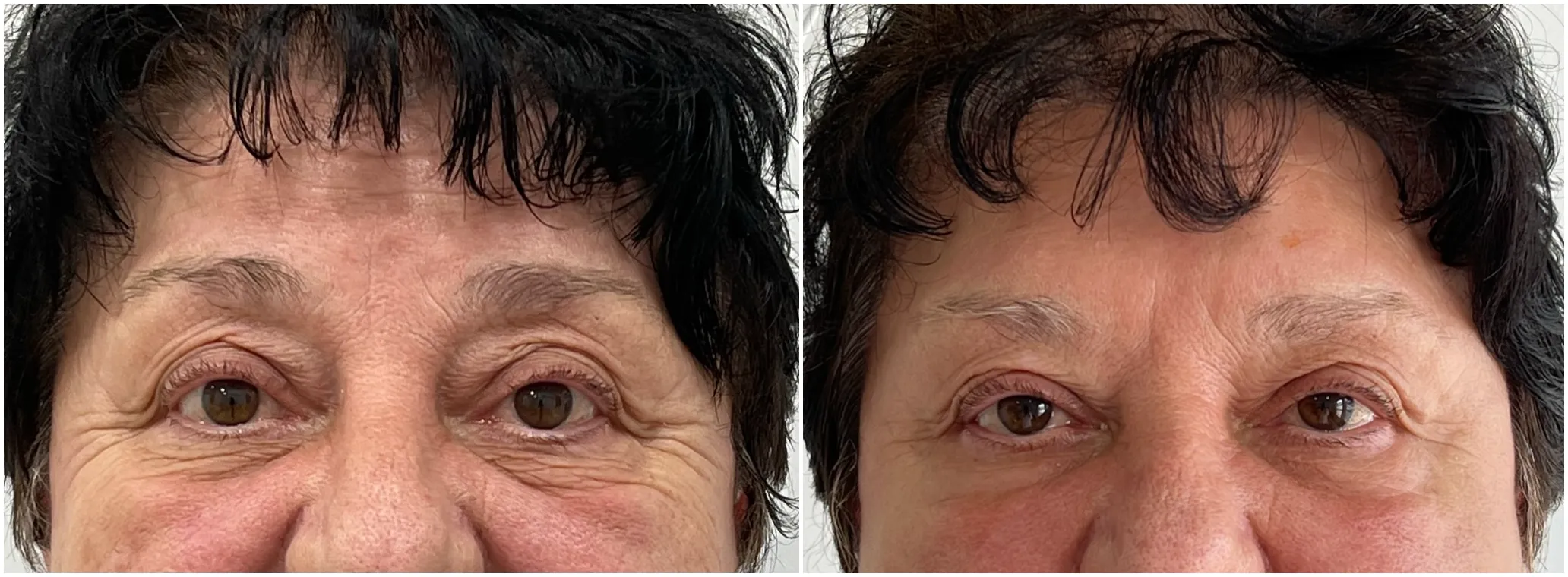
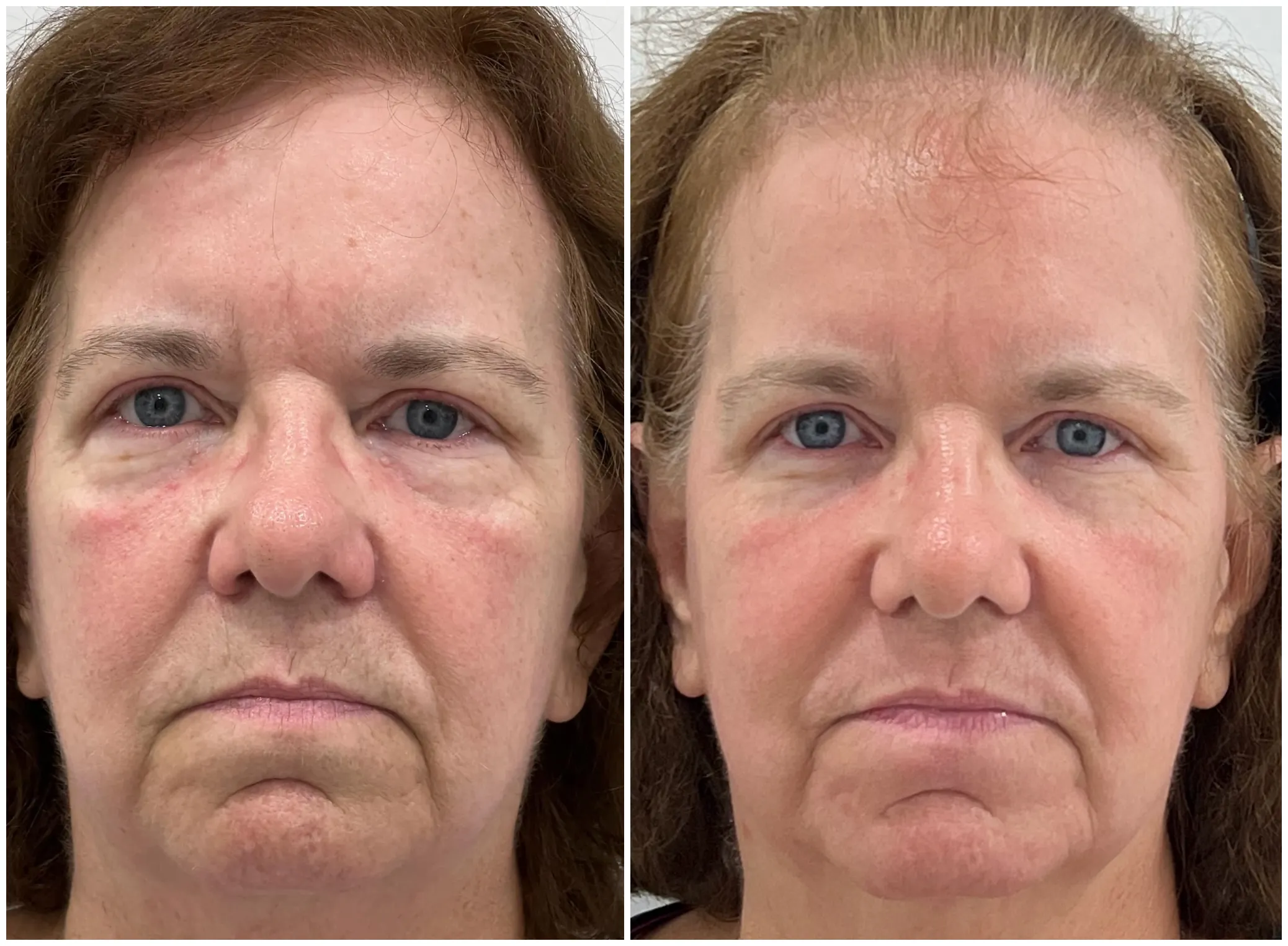
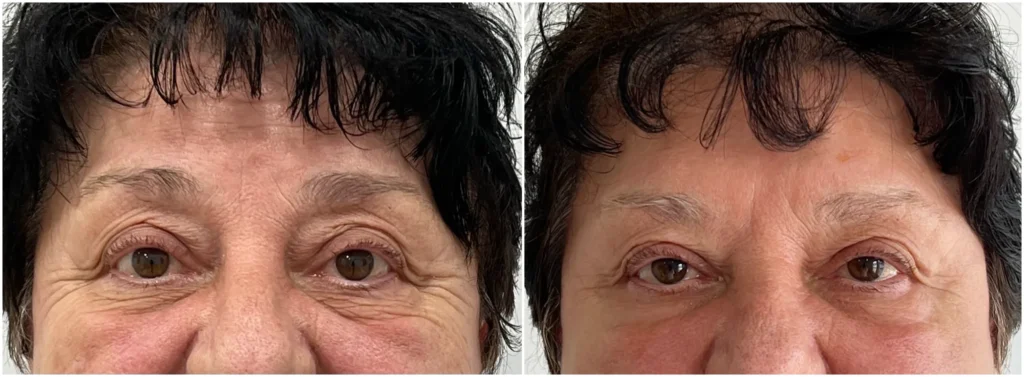
“Crepey” eyelid skin, the thin, crinkled, tissue-paper texture, comes from the loss of collagen and elastin in the skin. When patients say their eyes look tired or older, they are usually describing a mix of these changes:
- Crow’s feet that fan out from the corners of the eyes when you smile or squint.
- Fine lines that stay at rest, even when your face is relaxed.
- Crepey, thin skin on the upper and lower eyelids.
- Under-eye hollows from lost volume, which create shadows.
- Brown or red discoloration from sun damage.
- Puffy bags or heavy, hooded upper lids from fat shifting forward or excess eyelid skin.
A recent multispecialty review concluded that no single treatment addresses every one of these, and that the right plan depends on your skin quality, volume and eyelid support (Beer et al., 2026). That is why the first step at REJUVA is identifying what is driving your concern.
Match the Treatment to Your Eye-Area Concern
| Your main concern | Treatments that work best |
|---|---|
| Crow’s feet when you smile or squint | Neuromodulator: Botox, Daxxify, Jeuveau or Xeomin |
| Crepey eyelid skin and fine lines | Dual Frax non-ablative fractional laser; RF microneedling; daily retinoid eye cream |
| Deeper lines that stay at rest | Fractional CO2 or Er:YAG laser, often combined with a neuromodulator |
| Brown spots or uneven tone around the eyes | Dual Frax (1927 nm wavelength); IPL |
| Redness and visible small vessels | IPL |
| Under-eye hollows and shadows | Hyaluronic acid filler |
| Bulging bags or heavy, hooded upper lids | Eyelid surgery (blepharoplasty) usually gives the best, longest-lasting result |
Treatment Options for Crepey Eyelids and Eye Wrinkles
Dual Frax Laser for Crepey Eyelids and Fine Lines
Dual Frax is a non-ablative fractional laser that combines two wavelengths. The 1550 nm wavelength reaches deeper into the skin to rebuild collagen and soften fine, crepey wrinkling. The 1927 nm wavelength works closer to the surface to fade brown spots, uneven tone and sallowness. Because the eye area often shows both crepey texture and sun spots, this pairing is a natural fit.
In a multicenter study of 35 patients treated with both wavelengths, sun-damage scores improved by about 21 to 43% three months after treatment, including about 21% less fine wrinkling and 30% smoother texture. Results were best after a series of up to three treatments. Side effects were temporary redness, mild swelling, dryness and flaking that cleared within 7 to 10 days, with no scarring (Narurkar et al., 2018). In a head-to-head eye-area study, non-ablative fractional laser improved skin elasticity more than bipolar radiofrequency or IPL (Kołodziejczak & Rotsztejn, 2022).
Best for: crepey eyelid skin, fine lines and sun spots, especially for people who want minimal downtime. Typical plan: a series of about 3 to 5 sessions spaced a few weeks apart.
CO2 and Er:YAG Laser Resurfacing for Deeper Eye Wrinkles
Ablative fractional lasers, including CO2 and Er:YAG, remove tiny columns of the outer skin and heat the layer beneath it. They give the largest improvement for deeper lines and loose, crepey lower-eyelid skin, and ultra-pulsed fractional CO2 has shown significant improvement in eye-area and lower-eyelid wrinkles (Gao et al., 2025). Er:YAG is often chosen when a gentler resurfacing with faster healing is preferred.
The trade-off is about 1 to 2 weeks of redness, crusting and healing (Soares et al., 2024). The lower eyelid also needs careful, conservative settings so the lid keeps its natural position (Levy et al., 2025). That is why eyelid resurfacing should be done by an experienced physician. If you have had cold sores, we prescribe a preventive antiviral before treatment.
Best for: deeper lines at rest and moderate crepey lower-eyelid skin in people who can plan for a week or two of recovery.
RF Microneedling for Eyelid Skin Tightening
Radiofrequency (RF) heats the deeper skin using energy rather than light, which triggers new collagen and gradual tightening. Because it does not depend on skin pigment, it is a safe option across skin types. RF improves elasticity and wrinkles around the eyes, although in a direct comparison it was less effective than non-ablative fractional laser for elasticity (Kołodziejczak & Rotsztejn, 2022; Coerdt et al., 2025). That is why we often combine the two.
Best for: mild loose skin and crepey texture, as part of a combination plan.
IPL for Discoloration and Redness Around the Eyes
Intense pulsed light (IPL) targets brown pigment and redness, so it addresses the color changes that make the eye area look older. It also improves elasticity somewhat, though less than fractional laser (Kołodziejczak & Rotsztejn, 2022). We often use it alongside laser so that both color and texture improve.
Botox, Daxxify, Jeuveau and Xeomin for Crow’s Feet
Neuromodulators relax the muscle around the eye, which softens the crow’s feet that appear when you smile or squint. They are the cornerstone treatment for these “movement” lines (Carruthers et al., 2008). BOTOX Cosmetic and Xeomin are FDA-approved for crow’s feet. Daxxify and Jeuveau are FDA-approved for frown lines and may be used around the eyes off-label at the physician’s discretion. We choose among them based on your anatomy, past response and how long you want results to last. Results typically last a few months, and some patients find Daxxify lasts longer.
Neuromodulators do not repair thin, crepey skin or replace lost volume on their own (Gao et al., 2025). Placement around the eye must be precise, because injecting in the wrong spot can cause a drooping brow, double vision or difficulty closing the eye. These problems are uncommon in experienced hands, which is why injector skill matters here.
Best for: crow’s feet that appear with expression.
Fillers and Skin-Quality Injections for Hollows and Fine Lines
Hyaluronic acid filler is the main treatment for under-eye hollows (tear troughs) that cast shadows (Beer et al., 2026). Thin, hydrating hyaluronic acid injections can also improve fine lines and skin quality. In a split-face trial, adding a hyaluronic acid skin-quality injection to a neuromodulator gave greater and longer-lasting improvement in crow’s feet and skin texture at 3 and 6 months than the neuromodulator alone (Shishido et al., 2026). A layered injection approach combining volume, skin-quality filler and neuromodulator kept upper-face wrinkles improved for 12 months (Kim et al., 2026).
Eye Creams and Daily Skincare
Skincare will not replace a procedure, but it improves fine lines and protects your results. Topical retinoids have the strongest evidence for fine wrinkles (Chng et al., 2021; Lin et al., 2025). Because eyelid skin is sensitive, gentler eye formulations work best. In a 12-week study, a retinoid eye cream improved lines and wrinkles by about 33%, along with texture, dark circles and puffiness, without irritation (Kaufman et al., 2022). Daily broad-spectrum sunscreen and sunglasses matter most of all, because sun exposure is the main driver of wrinkles and discoloration (Lin et al., 2025).
Comparison Table: Eye-Area Treatments at a Glance
| Treatment | Best for | Typical sessions | Downtime | What studies show |
|---|---|---|---|---|
| Dual Frax (non-ablative fractional laser) | Crepey skin, fine lines, sun spots | About 3 to 5 | Redness, swelling, flaking for up to 7 to 10 days | ~21% less fine wrinkling, ~30% smoother texture at 3 months |
| Fractional CO2 or Er:YAG | Deeper lines, crepey lower lids | Usually 1 to 2 | About 1 to 2 weeks | Largest improvement for deeper wrinkles |
| RF microneedling | Mild laxity and crepey texture | Series | 1 to 2 days of redness | Improves elasticity and wrinkles; safe across skin types |
| IPL | Brown spots and redness | Series | Minimal | Targets pigment and redness |
| Botox, Daxxify, Jeuveau, Xeomin | Crow’s feet with expression | Repeat every few months | None | Cornerstone for movement lines |
| Hyaluronic acid filler | Under-eye hollows | Usually 1, with touch-ups | Possible bruising or swelling for a few days | Restores volume; lasts longer with a neuromodulator |
| Retinoid eye cream | Fine lines, maintenance | Daily | None (start slowly) | ~33% improvement in lines at 12 weeks |
Individual results vary. Your plan is based on an in-person evaluation.
Why We Combine Treatments at REJUVA
Because the eye area ages in several ways at once, a combination plan usually outperforms any single treatment. Combining neuromodulators with fillers improves results and may extend how long they last, and adding energy-based treatments improves the overall outcome further (Alam & Tung, 2018; Juhasz et al., 2022). At REJUVA, a typical layered plan looks like this:
- A neuromodulator to soften crow’s feet caused by movement.
- Dual Frax laser, or CO2 or Er:YAG for deeper lines, to resurface crepey texture and sun damage.
- RF microneedling to build collagen and tighten mildly loose skin.
- Add-ons as needed: IPL for discoloration, filler for hollows, and a retinoid eye cream for maintenance.
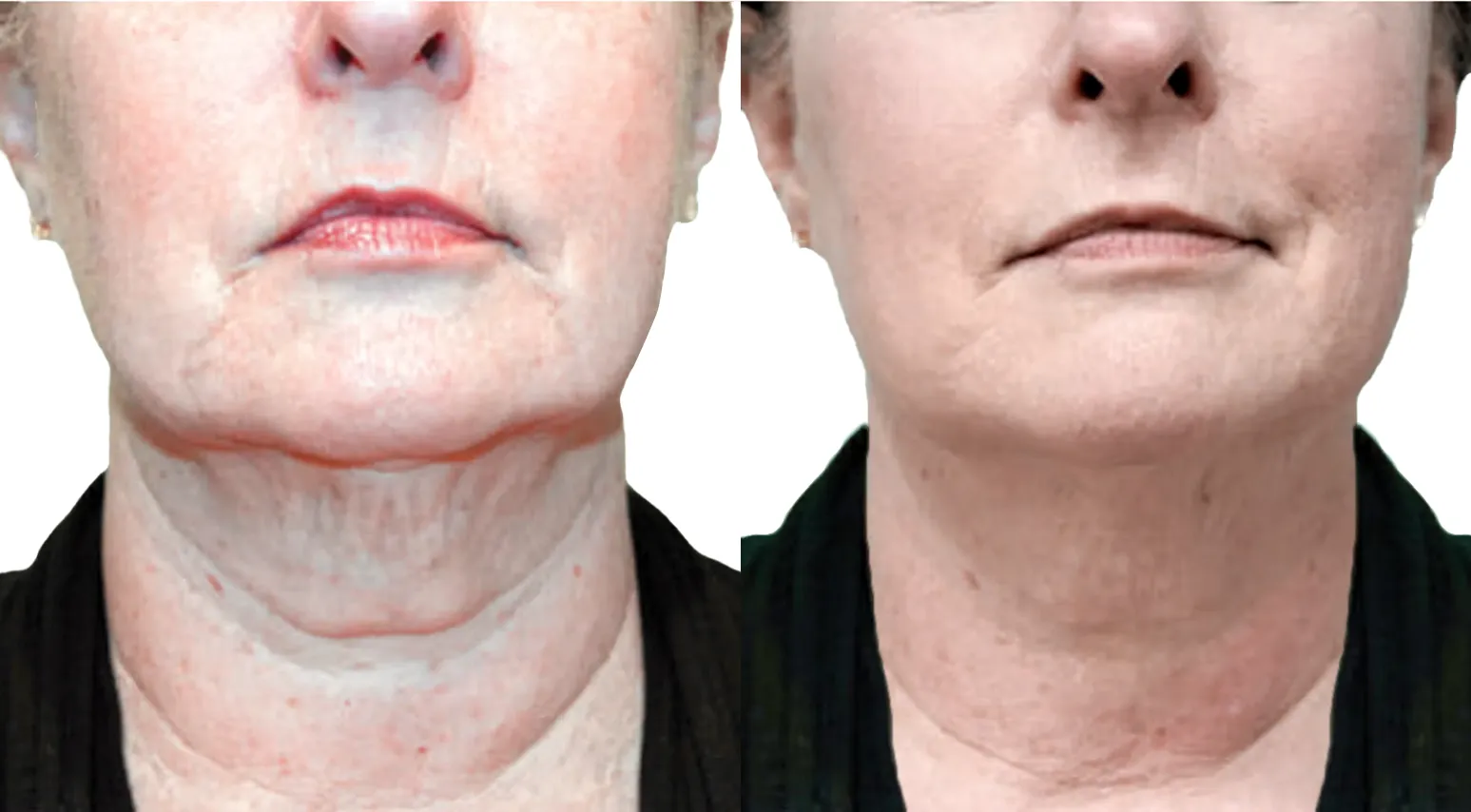
Many patients treat the eyes together with the rest of the face. We also explain the best treatments for vertical lip lines, jowls and lower-face sagging, and sun damage and brown spots.
Are You a Good Candidate?
You are likely a good candidate for nonsurgical treatment if you have crow’s feet, fine lines, crepey eyelid skin, mild hollowing or sun spots, and you want natural-looking improvement without surgery. Many of our patients in their 50s, 60s and 70s choose this route because treatments are done in the office with little or no downtime.
Nonsurgical treatment is not right for everyone. If you have bulging under-eye bags from fat that has shifted forward, a weak lower eyelid, or heavy, hooded upper lids, eyelid surgery (blepharoplasty) remains the best and most lasting option (Beer et al., 2026; Gao et al., 2025). When hooded upper lids block your vision, surgery may be covered by insurance. We will tell you honestly which group you fall into and help you take the right next step.
If you have darker skin, non-ablative lasers such as Dual Frax and RF are usually the safer choices, because aggressive resurfacing carries a higher risk of dark spots in melanin-rich skin (Soares et al., 2024; Salameh et al., 2022). We adjust settings and may perform a test spot first.
What to Expect: Results, Timeline and Downtime
- Consultation: we look at how your lines behave when you move and at rest, your skin quality, volume, eyelid position and skin type, then build a plan with you.
- Treatment day: we use protective eye shields during any laser or light treatment near the eyes, along with numbing and cooling for comfort.
- Downtime: none for neuromodulators, a few days of redness and swelling for Dual Frax or RF microneedling, and about 1 to 2 weeks for CO2 or Er:YAG.
- When you see results: neuromodulators take effect within about 1 to 2 weeks. Laser and RF results build over about 3 months as new collagen forms.
- How long results last: collagen-based improvement lasts for years, though aging and sun exposure continue. Neuromodulators last a few months. Daily sunscreen, sunglasses and periodic maintenance help keep your results.
An honest note on the evidence: many eye-area studies are small and follow patients for months rather than years, so long-term data are still limited. We base our recommendations on the best available research and our own clinical experience.
Frequently Asked Questions
What Is the Best Treatment for Crepey Eyelids?
For most people, the best results come from fractional laser, such as Dual Frax for mild to moderate crepiness or CO2 and Er:YAG for more advanced crepiness, often combined with RF microneedling and a gentle retinoid eye cream. Heavy, hanging eyelid skin is better treated with surgery.
Can Botox Fix Crepey Eyelids?
No. Botox and other neuromodulators soften crow’s feet caused by squinting and smiling, but they do not rebuild thin, crepey skin. Crepey skin needs a collagen-building treatment such as fractional laser or RF microneedling.
What Is the Best Laser for Wrinkles Around the Eyes?
Fractional lasers are considered the gold standard. Non-ablative Dual Frax improves fine lines, texture and sun spots with little downtime. Fractional CO2 and Er:YAG give larger improvements for deeper wrinkles with about 1 to 2 weeks of recovery.
Is Laser Treatment Near the Eyes Safe?
Yes, when it is performed by an experienced physician. We use protective eye shields and conservative settings on the delicate lower eyelid to protect the eye and the eyelid’s natural position.
Which Neuromodulator Is Best for Crow’s Feet?
BOTOX Cosmetic and Xeomin are FDA-approved for crow’s feet. Daxxify and Jeuveau are approved for frown lines and may be used off-label around the eyes. The best choice depends on your anatomy, past response and how long you want results to last.
Do Eye Creams Work for Crepey Skin?
A gentle retinoid eye cream can improve fine lines and texture over about 12 weeks and helps maintain procedure results. Eye creams cannot tighten loose skin or match the results of laser treatment.
How Much Does Treatment for Eye Wrinkles Cost?
Cost depends on which treatments and how many sessions you need. These treatments are cosmetic and not covered by insurance. We review costs with you at your consultation.
Where Can I Get Crepey Eyelid and Crow’s Feet Treatment Near Venice or Sarasota, FL?
REJUVA Dermatology in Venice, FL offers Dual Frax, CO2 and Er:YAG laser, RF microneedling, IPL, Botox, Daxxify, Jeuveau and Xeomin under the direction of double board-certified dermatologists, serving patients from Sarasota, Nokomis, Osprey, North Port, Englewood and the Wellen Park area.
Schedule an Eye Rejuvenation Consultation in Venice, FL
If the skin around your eyes makes you look more tired or older than you feel, a personalized evaluation is the best first step. At REJUVA Dermatology, a double board-certified dermatologist will assess your eye area and design a plan that fits your goals, schedule and budget.
REJUVA Dermatology, Cosmetic & Weight Loss Center
395 Commercial Ct, Ste C, Venice, FL 34292 · (941) 529-0070 · Book an appointment
Serving Venice, Sarasota, Nokomis, Osprey, North Port, Englewood and Wellen Park.
About the Author
Sean E. Mazloom, MD, FAAD, Double Board-Certified Dermatologist and Mohs Surgeon, is co-founder of REJUVA Dermatology in Venice, Florida. He has extensive clinical experience with fractional laser systems including Dual Frax, CO2 and Er:YAG, RF microneedling, IPL and combination facial rejuvenation protocols.
References
- Salameh F, et al. Lasers in Surgery and Medicine. 2022.
- Gao et al. Lasers in Medical Science. 2025.
- Beer et al. Dermatologic Surgery. 2026.
- Systematic review of periorbital rejuvenation (65 studies, 3,764 patients). Lasers in Surgery and Medicine ePosters. 2026.
- Narurkar VA, et al. Journal of Drugs in Dermatology. 2018.
- Kołodziejczak A, Rotsztejn H. Lasers in Medical Science. 2022.
- Soares et al. Lasers in Medical Science. 2024.
- Levy et al. Lasers in Surgery and Medicine. 2025.
- Coerdt et al. Clinics in Plastic Surgery. 2025.
- Carruthers J, et al. Plastic and Reconstructive Surgery. 2008.
- U.S. Food and Drug Administration. BOTOX Cosmetic prescribing information.
- U.S. Food and Drug Administration. XEOMIN prescribing information (upper facial lines indication, 2024).
- Shishido et al. Aesthetic Plastic Surgery. 2026.
- Kim et al. Plastic and Reconstructive Surgery. 2026.
- Chng et al. Cochrane Database of Systematic Reviews. 2021.
- Lin et al. Scientific Reports. 2025.
- Kaufman et al. Journal of Drugs in Dermatology. 2022.
- Alam M, Tung R. Journal of the American Academy of Dermatology. 2018.
- Juhasz et al. Cosmetic Dermatology. 2022.