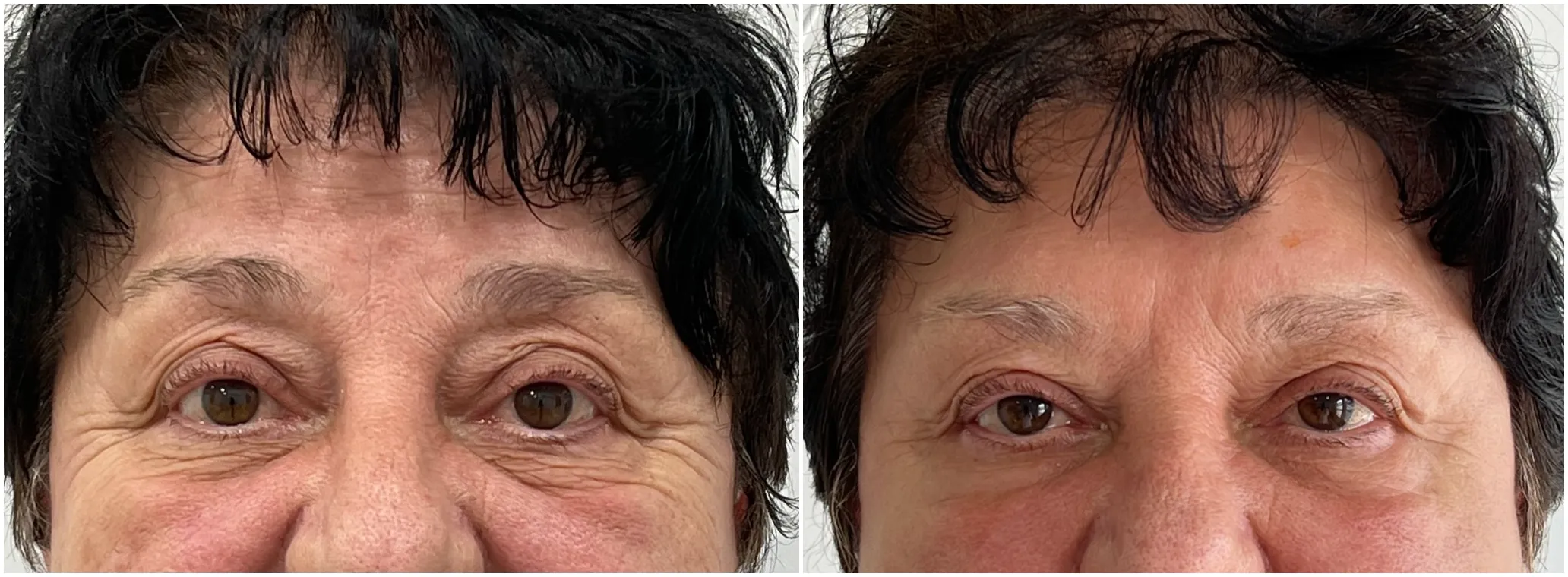
Written and medically reviewed by Sean E. Mazloom, MD, FAAD — Double Board-Certified Dermatologist and Mohs Surgeon, Cosmetic and Laser Expert
Table of Contents
The Short Answer
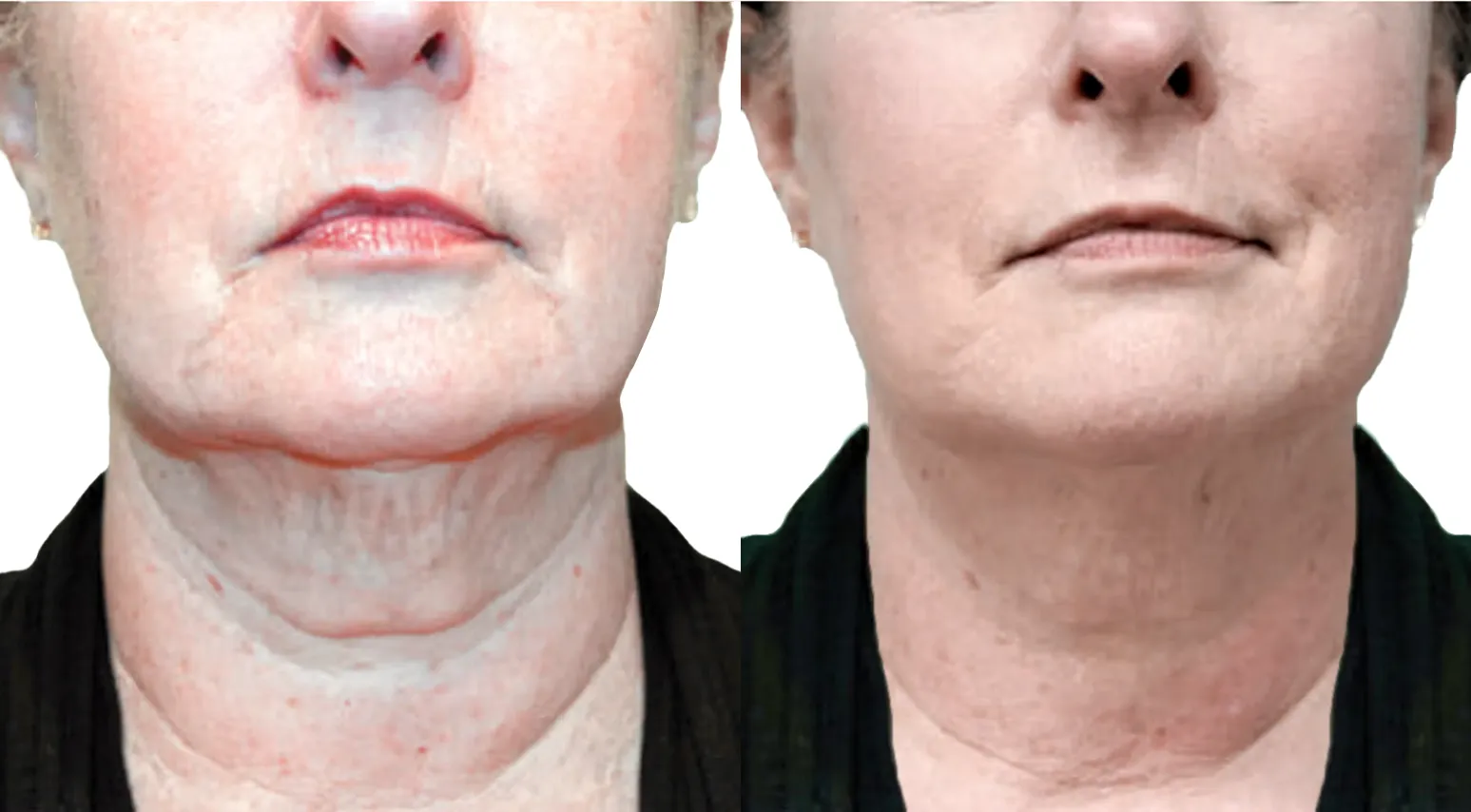
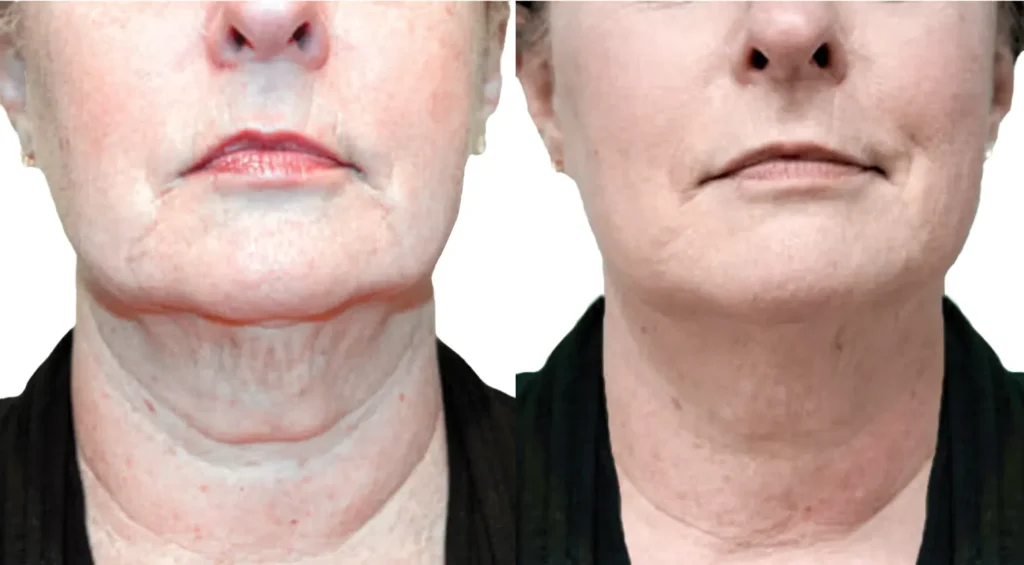
The best nonsurgical treatment for a sagging or aging neck depends on what is actually causing the problem. Mild to moderate skin laxity may improve with HIFU (focused ultrasound) or radiofrequency-based tightening. Crepey skin, fine lines and sun damage may respond better to RF microneedling, nonablative fractional laser treatment such as Dual Frax, or selected resurfacing treatments. Vertical platysma bands can be softened with neuromodulators such as BOTOX Cosmetic, while red-brown sun damage on the sides of the neck often responds well to IPL. Fullness under the chin requires a different strategy aimed at fat reduction. Because many patients have several of these concerns at the same time, the most effective nonsurgical neck-rejuvenation plan is often a customized combination rather than a single device.
Key Takeaways
• A “turkey neck” is not one diagnosis. Loose skin, crepey texture, muscle bands, sun damage and under-chin fat require different treatments.
• HIFU and radiofrequency-based treatments can improve mild to moderate neck laxity by stimulating collagen at different tissue depths.
• RF microneedling is especially useful when laxity is accompanied by crepey texture, fine lines or horizontal neck lines.
• Dual Frax nonablative fractional laser treatment can improve fine lines, texture and photodamage with less recovery than aggressive ablative resurfacing.
• IPL is particularly useful for the mottled red-brown discoloration of the neck known as poikiloderma of Civatte.
• BOTOX Cosmetic is FDA-approved for temporary improvement of moderate to severe platysma bands. Other neuromodulators may be used off-label when clinically appropriate.
• Submental fullness or a double chin is a fat problem, not simply a skin-tightening problem, and should be evaluated separately.
• When there is substantial hanging skin or advanced structural laxity, surgery generally produces a larger change than nonsurgical treatment.
Why the Neck Can Age Faster Than the Face
Patients frequently tell us that their face looks younger than their neck. The neck has thinner skin and fewer pilosebaceous units than many facial areas, and years of ultraviolet exposure can add pigment changes, redness, fine lines and collagen loss. At the same time, the platysma muscle can become more visible, the jaw-neck angle can soften, and fat under the chin may become more prominent.
That is why “neck tightening” is not a single treatment category. Before recommending a device, we first determine which anatomical changes are creating the appearance that bothers you most.
What Is Making Your Neck Look Older?
• Loose or sagging skin: collagen and elastin loss can soften the jawline and create laxity under the chin and along the neck.
• Crepey skin and fine lines: thin, sun-damaged skin can develop a finely wrinkled texture and horizontal necklace lines.
• Red-brown discoloration: chronic sun exposure can create poikiloderma of Civatte, a mixture of pigment and visible blood vessels on the sides of the neck and upper chest.
• Vertical neck bands: platysma muscle activity can create prominent vertical cords, especially when talking, grimacing or tightening the neck.
• Submental fullness: fat under the chin can blur the jaw-neck angle even when the skin itself is relatively firm.
• Advanced laxity: heavier hanging skin or marked muscle laxity may exceed what a nonsurgical treatment can reasonably correct.
Which Nonsurgical Neck Treatment Is Best for Each Concern?
| Main concern | Treatments commonly considered | What the treatment is targeting |
| Mild to moderate loose skin | HIFU / focused ultrasound; radiofrequency-based tightening; RF microneedling | Collagen remodeling and tissue tightening |
| Crepey skin, fine lines and texture | RF microneedling; Dual Frax nonablative fractional laser; selected CO2 resurfacing | Dermal remodeling and surface texture |
| Red-brown sun damage | IPL, sometimes combined with fractional laser | Pigment plus superficial vascular redness |
| Vertical platysma bands | BOTOX Cosmetic; selected alternative neuromodulators off-label | Muscle activity |
| Double chin / submental fullness | Noninvasive fat-reduction strategies, sometimes combined with tightening | Submental fat plus surrounding skin quality |
| Advanced hanging skin | Surgical neck lift evaluation | Excess skin and deeper structural laxity |
HIFU for Mild to Moderate Neck Laxity
High-intensity focused ultrasound (HIFU), including microfocused ultrasound technologies, delivers focused energy beneath the skin to create controlled thermal zones that stimulate collagen remodeling. It is most appropriate for patients with mild to moderate laxity who want gradual tightening without surgical incisions and with limited downtime.
Clinical studies of microfocused ultrasound for face and neck laxity generally show improvement developing over the first several months. It is important to set expectations correctly: HIFU is a collagen-stimulating treatment, not a surgical neck lift, and it will not remove substantial excess skin.
Best suited for: mild to moderate laxity beneath the jawline and along the neck, particularly when minimizing downtime is important.
RF Microneedling for Loose, Crepey Neck Skin
Radiofrequency microneedling combines microneedles with controlled radiofrequency energy delivered into the skin. This makes it particularly useful when a patient has more than one concern: mild laxity plus crepey texture, fine lines or horizontal neck lines.
The treatment stimulates dermal remodeling and new collagen while allowing the physician to adjust treatment depth and energy to the anatomy being treated. Temporary redness and swelling are common, but recovery is generally much shorter than with aggressive ablative resurfacing.
Best suited for: mild laxity with crepey texture, fine lines, necklace lines or overall loss of skin quality.
HIFU vs. RF Microneedling: Which Is Better for the Neck?
This is one of the most useful comparisons for patients searching for nonsurgical neck tightening. They are not identical treatments. HIFU is designed to deliver focused energy into deeper tissue planes, while RF microneedling treats the dermis through insulated or noninsulated microneedles depending on the platform. Both can stimulate collagen, but the choice should depend on anatomy and treatment goals rather than simply choosing the device with the strongest marketing.
If deeper laxity is the dominant concern, focused ultrasound may play a larger role. If the neck is loose but also crepey or lined, RF microneedling may offer additional texture improvement. In selected patients, treatments at different depths may be combined as part of a staged plan.
Dual Frax for Crepey Neck Skin, Fine Lines and Sun Damage
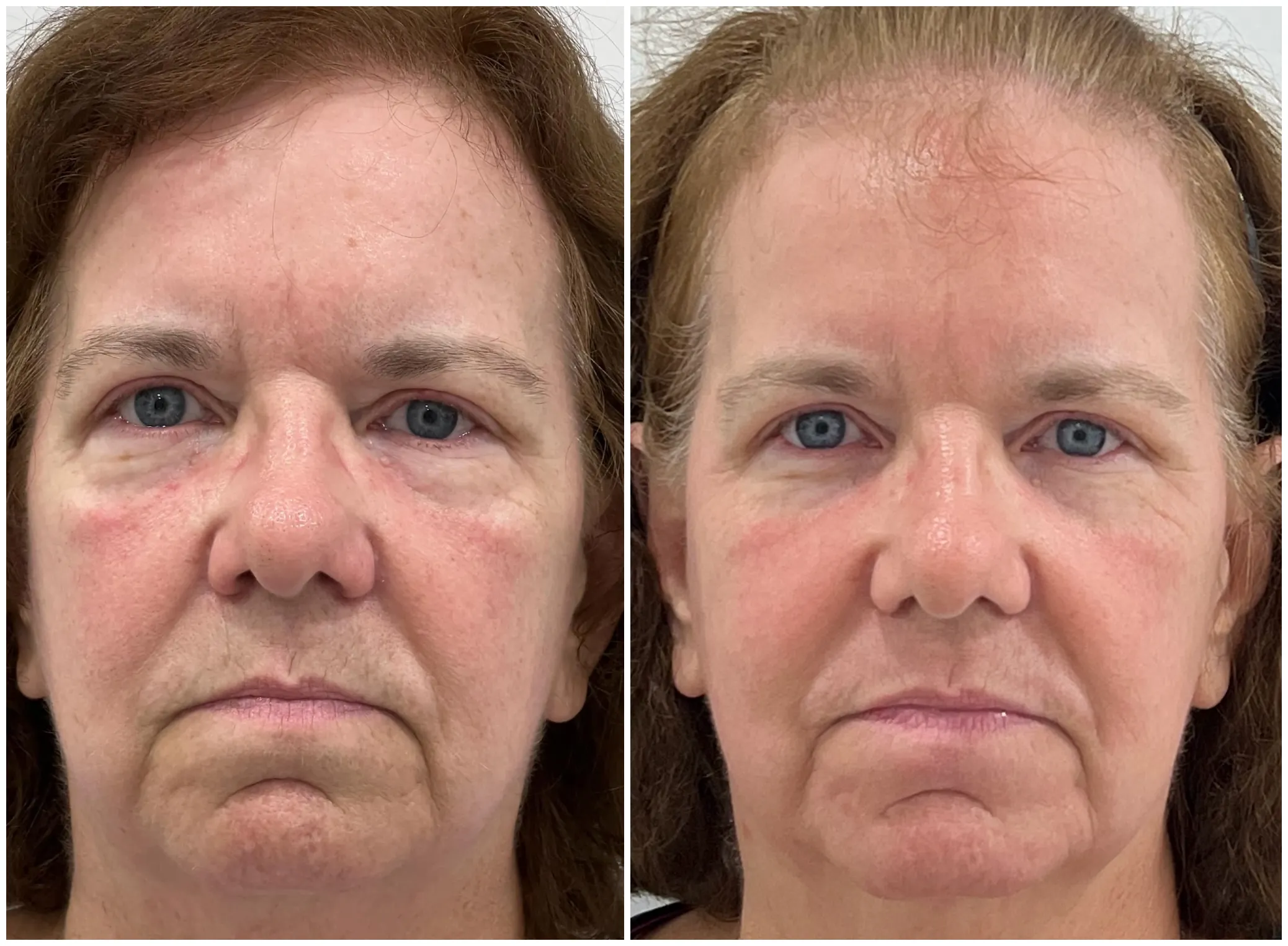
Nonablative fractional laser resurfacing is another important option for the aging neck. Dual Frax uses 1550-nm and 1927-nm fractional wavelengths, allowing treatment to be customized for texture, fine lines and photodamage. The 1550-nm wavelength is used for dermal remodeling and texture, while the 1927-nm wavelength is particularly useful for superficial photodamage and uneven pigmentation.
A 2025 clinical study of 1550-nm nonablative fractional laser treatment of the neck found significant improvement in wrinkle severity and increased dermal thickness after a series of treatments, with temporary redness and swelling as the main reported effects.
Best suited for: crepey texture, fine lines, sun-damaged skin, uneven tone and patients who want resurfacing with less recovery than traditional aggressive ablative laser treatment.
RF Microneedling vs. Dual Frax for Crepey Neck Skin
For patients whose main complaint is “my neck skin looks crepey,” the choice often comes down to what accompanies the crepiness. RF microneedling is useful when texture is combined with laxity and horizontal lines. Dual Frax is particularly attractive when fine lines, rough texture, sun damage and uneven tone are prominent. Because these technologies remodel skin differently, they can also complement one another in a carefully planned treatment series.
Book a neck-rejuvenation consultation at REJUVA in Venice to find out which of these treatments fits your neck, or call (941) 529-0070.
CO2 Laser Resurfacing for Selected Necks
Fractional CO2 laser resurfacing can produce stronger resurfacing and collagen remodeling than nonablative treatments, but the neck requires considerably more caution than the face. Neck skin has different healing characteristics and aggressive treatment can increase the risk of prolonged redness, pigment alteration, scarring or delayed healing.
For that reason, CO2 treatment of the neck should be conservative and reserved for carefully selected patients when the potential benefit justifies the additional recovery and risk. Many patients seeking modest neck rejuvenation are better candidates for nonablative fractional laser, RF microneedling, or a combination approach.
IPL for Red and Brown Sun Damage on the Neck
If the neck looks mottled, reddish and brown rather than simply loose, the problem may be poikiloderma of Civatte. IPL is particularly useful because its broad spectrum can target both vascular redness and brown pigment. Published studies have shown substantial improvement in both components of poikiloderma with IPL.
IPL does not replace a tightening treatment when laxity is the main concern. Instead, it can be combined with RF microneedling or fractional laser treatment when a patient wants improvement in both color and texture.
Best suited for: red-brown sun damage on the sides of the neck and upper chest, visible superficial vessels and uneven pigmentation.
BOTOX Cosmetic and Other Neuromodulators for Vertical Neck Bands
Vertical cords in the front of the neck are often caused by contraction of the platysma muscle. These bands are fundamentally different from loose skin, so a laser or tightening device alone may not correct them.
BOTOX Cosmetic is FDA-approved for temporary improvement in the appearance of moderate to severe platysma bands associated with platysma muscle activity. At REJUVA, we also offer Daxxify, Jeuveau and Xeomin; when these products are used for platysma bands, that use is off-label and should be individualized by the treating physician.
Neuromodulators can soften prominent bands and improve the appearance of the jaw-neck transition, but they do not remove excess skin or submental fat. Precise neck anatomy and injection technique are important.
What About a Double Chin?
A double chin is not always a skin-tightening problem. Submental fat can obscure the jawline even in patients with relatively good skin elasticity. Conversely, removing fat from someone with significant skin laxity can sometimes make looseness more noticeable.
At REJUVA, we evaluate the amount of submental fat, skin elasticity and jaw-neck anatomy before recommending a nonsurgical fat-reduction strategy. When both fullness and laxity are present, fat reduction may be combined or staged with HIFU, RF microneedling or another tightening treatment. The number of sessions and degree of improvement depend on the technology used and the individual anatomy.
Why Combination Treatment Often Works Better
Many patients do not have just one neck-aging problem. A typical patient may have mild laxity, crepey skin, horizontal lines, sun discoloration and early platysma bands at the same time. No single device targets all of those structures.
A customized REJUVA plan may therefore combine:
• HIFU or another appropriate tightening treatment for deeper laxity.
• RF microneedling for dermal remodeling, crepey texture and lines.
• Dual Frax for fractional resurfacing, fine lines and photodamage.
• IPL for red-brown sun discoloration.
• BOTOX Cosmetic or another appropriately selected neuromodulator for platysma bands.
• A submental fat-reduction treatment when fullness beneath the chin is contributing to the problem.
The goal is not to use every technology. It is to identify the two or three changes that matter most and choose treatments that address those specific layers without unnecessary procedures.
When Nonsurgical Neck Tightening Is Not Enough
Nonsurgical treatments are most useful for mild to moderate changes. They can improve skin quality, collagen, texture, bands and selected areas of laxity, but they cannot reproduce the degree of skin removal and structural repositioning possible with surgery.
If there is heavy hanging skin, marked muscle laxity or a very blunted jaw-neck angle, a surgical neck lift may provide a more meaningful and durable correction. A cosmetic consultation should include that discussion rather than promising that an energy device can replace surgery in every patient.
What to Expect from a Neck-Rejuvenation Consultation at REJUVA
A useful neck consultation should evaluate more than the skin surface. At REJUVA, we assess:
• How much true skin laxity is present.
• Whether the skin is crepey, sun damaged or both.
• Whether vertical platysma bands are contributing to the appearance.
• Whether submental fat is blunting the jawline.
• Your skin type and risk of pigment changes.
• How much downtime you are comfortable with.
• Whether your goals are realistic for nonsurgical treatment or would be better served by surgery.
This anatomy-first approach allows us to choose among multiple technologies rather than trying to make every patient fit one device.
Frequently Asked Questions
What Is the Best Nonsurgical Treatment for a Turkey Neck?
For mild to moderate aging, there is no single best treatment. HIFU or radiofrequency-based treatment can address laxity; RF microneedling and Dual Frax can improve crepey texture and lines; IPL treats red-brown sun damage; neuromodulators treat platysma bands; and submental fullness requires a fat-focused strategy. Advanced hanging skin is usually better treated surgically.
Can You Tighten Loose Neck Skin Without Surgery?
Yes, mild to moderate laxity can often be improved without surgery using focused ultrasound, radiofrequency-based treatments, RF microneedling and selected laser treatments. The improvement is generally gradual and more subtle than a surgical neck lift.
Is HIFU or RF Microneedling Better for a Sagging Neck?
It depends on the anatomy. HIFU is often chosen when deeper laxity is the main concern. RF microneedling is particularly useful when laxity occurs together with crepey texture, fine lines or horizontal neck lines. Some patients benefit from a staged combination.
What Is the Best Treatment for Crepey Neck Skin?
RF microneedling and nonablative fractional laser treatments such as Dual Frax are important options. RF microneedling combines collagen remodeling with texture improvement, while Dual Frax can be particularly useful when fine lines, photodamage and uneven tone accompany the crepey texture.
Can Fraxel or Dual Frax Be Used on the Neck?
Nonablative fractional wavelengths can be used on appropriately selected neck skin. Dual Frax combines 1550-nm and 1927-nm wavelengths that can be customized for texture, fine lines and photodamage. The neck should be treated more conservatively than many facial areas.
Does IPL Tighten the Neck?
IPL is primarily a color-correction treatment rather than a major tightening treatment. It is particularly useful for poikiloderma of Civatte, where brown pigmentation and vascular redness occur together. It can be combined with tightening or fractional resurfacing treatments.
Can BOTOX Cosmetic Improve Neck Bands?
Yes. BOTOX Cosmetic is FDA-approved for temporary improvement of moderate to severe platysma bands associated with platysma muscle activity. It treats the muscle component of an aging neck, not excess skin or fat.
How Do I Get Rid of a Double Chin Without Surgery?
Several nonsurgical fat-reduction approaches are available, but the right choice depends on the amount of submental fat and the elasticity of the overlying skin. When laxity is also present, fat reduction may need to be combined with a tightening treatment.
How Many Treatments Will I Need?
That depends on the modality and the degree of aging. Some focused-ultrasound plans may involve a single treatment followed by reassessment, while RF microneedling, fractional laser, IPL and fat-reduction treatments are often performed as a series. Your plan should be based on anatomy rather than a fixed package.
How Long Do Nonsurgical Neck-Tightening Results Last?
Collagen-stimulating treatments can produce improvement that persists beyond the initial treatment period, but the neck continues to age and accumulate sun exposure. Duration varies by modality, anatomy and maintenance. Neuromodulator effects are temporary and require repeat treatment.
Where Can I Get Nonsurgical Neck Tightening Near Venice or Sarasota, Florida?
REJUVA Dermatology in Venice offers a multi-modality approach to neck rejuvenation, including HIFU, RF microneedling, Dual Frax fractional laser treatment, CO2 laser in selected patients, IPL, neuromodulators and nonsurgical strategies for submental fullness. We serve patients from Venice, Sarasota, Wellen Park, North Port, Englewood, Nokomis, Osprey and surrounding Southwest Florida communities.
Schedule a Nonsurgical Neck-Rejuvenation Consultation in Venice, Florida
If loose neck skin, crepey texture, neck bands, sun damage or a double chin is bothering you, the most useful first step is determining which anatomical changes are actually responsible. At REJUVA Dermatology, we can evaluate the skin, muscle, fat and jaw-neck contour and build a treatment plan around your goals, desired downtime and degree of correction.
REJUVA Dermatology, Cosmetic & Weight Loss Center
395 Commercial Ct, Ste C, Venice, FL 34292
Serving Venice, Sarasota, Wellen Park, North Port, Englewood, Nokomis, Osprey, and surrounding Southwest Florida communities.
About the Author
Sean E. Mazloom, MD, FAAD — Double Board-Certified Dermatologist and Mohs Surgeon, Cosmetic and Laser Expert — is co-founder of REJUVA Dermatology in Venice, Florida. His cosmetic practice includes laser resurfacing, nonablative fractional laser treatments, radiofrequency microneedling, HIFU, injectables and combination approaches to facial and neck rejuvenation.
References
1. Sturm A, et al. Nonsurgical Rejuvenation of the Neck. Facial Plast Surg Clin North Am. 2022;30(3):357-365.
2. Sturm A, et al. Nonsurgical Rejuvenation of the Neck. Clin Plast Surg. 2023.
3. Alhaddad M, et al. A Randomized, Split-Face, Evaluator-Blind Clinical Trial Comparing Monopolar Radiofrequency Versus Microfocused Ultrasound With Visualization for Lifting and Tightening of the Face and Upper Neck. Dermatol Surg. 2019.
4. Alster TS, et al. A Randomized Evaluator-Blinded Trial Comparing Subsurface Monopolar Radiofrequency With Microfocused Ultrasound for Lifting and Tightening of the Neck. Dermatol Surg. 2017.
5. Babaie S, et al. Safety and efficacy of 1550-nm non-ablative fractional laser for neck rejuvenation. Lasers Med Sci. 2025.
6. Tierney EP, et al. Treatment of poikiloderma of Civatte using intense pulsed light source: 7 years of experience. Dermatol Surg. 2008.
7. U.S. Food and Drug Administration. BOTOX Cosmetic (onabotulinumtoxinA) Prescribing Information. 2024.
8. Kumar N, et al. Radiofrequency Microneedling for Facial Rejuvenation: A Systematic Review. J Cosmet Dermatol. 2026.
9. Jerdan K, Fabi S. A noninvasive approach to off-face skin laxity and tightening: a review of the literature. Semin Cutan Med Surg. 2015.