By Sean E. Mazloom, MD, FAAD, Double Board-Certified Dermatologist and Mohs Surgeon
Medically reviewed by Golta Rasouli, MD · Last updated October 2026
Table of Contents
Abstract
Atrophic acne scarring is a common and psychologically burdensome sequela of acne vulgaris. Energy- and needle-based resurfacing devices are the mainstay of correction, but direct comparative guidance remains limited by small, heterogeneous trials. This review compares 4 widely used modalities, radiofrequency (RF) microneedling, fractional ablative carbon dioxide (CO₂) laser, fractional ablative erbium:yttrium-aluminum-garnet (Er:YAG, 2940 nm) laser, and dual-wavelength nonablative fractional laser (1550-nm erbium-glass/1927-nm thulium), with respect to mechanism, efficacy, safety, downtime, skin-of-color considerations, scar morphology, and combination strategies. Across the comparative literature, ablative fractional lasers (particularly CO₂, followed closely by Er:YAG) tend to achieve the greatest single-modality textural improvement, whereas RF microneedling offers comparable but gentler remodeling with substantially less downtime and a markedly lower risk of postinflammatory hyperpigmentation (PIH). Er:YAG occupies a useful middle ground between CO₂ and the energy-sparing devices, and nonablative fractional photothermolysis balances moderate efficacy with minimal recovery. Device selection should be individualized by Fitzpatrick skin type, scar morphology, downtime tolerance, and risk profile.
Introduction
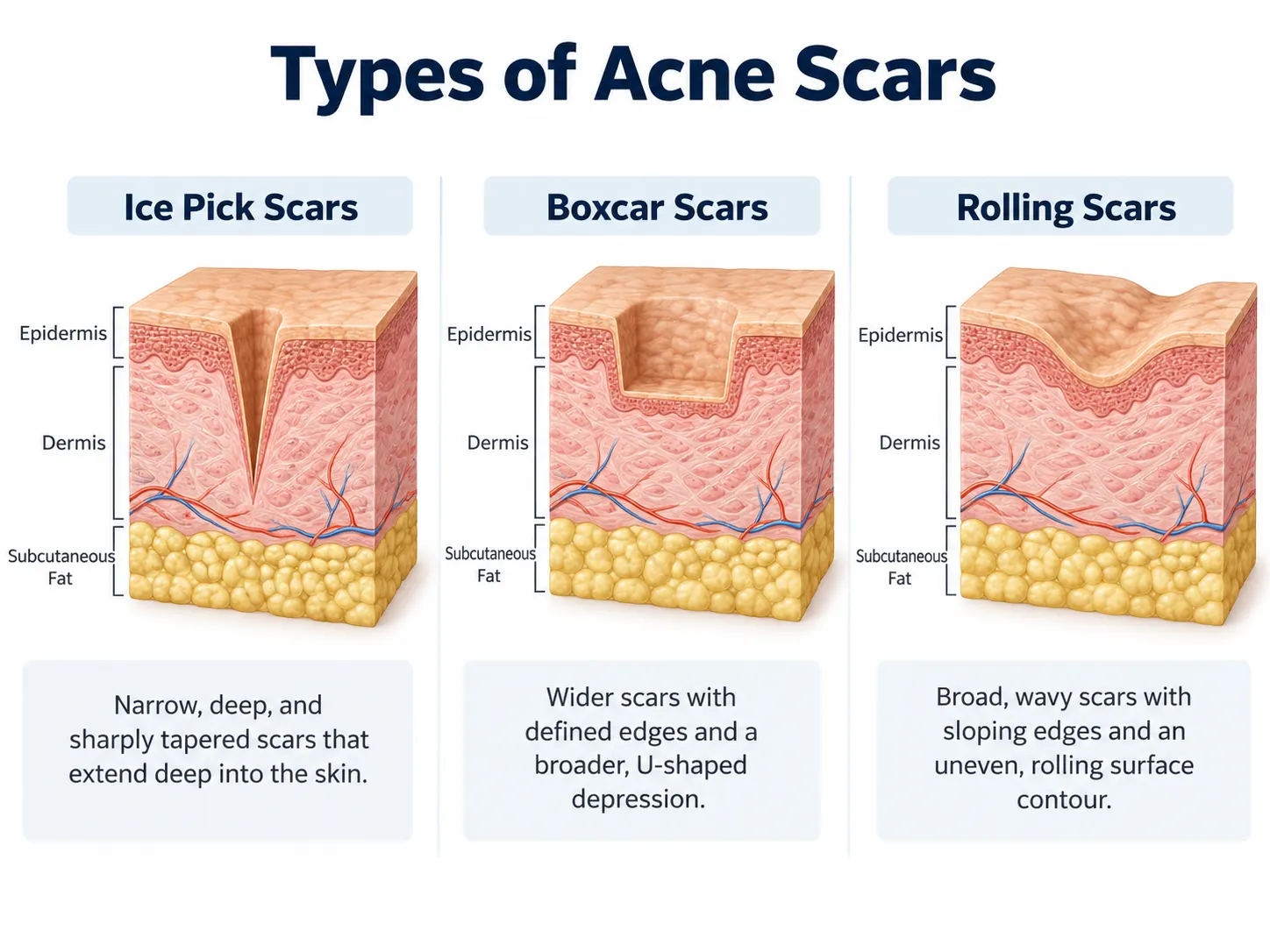
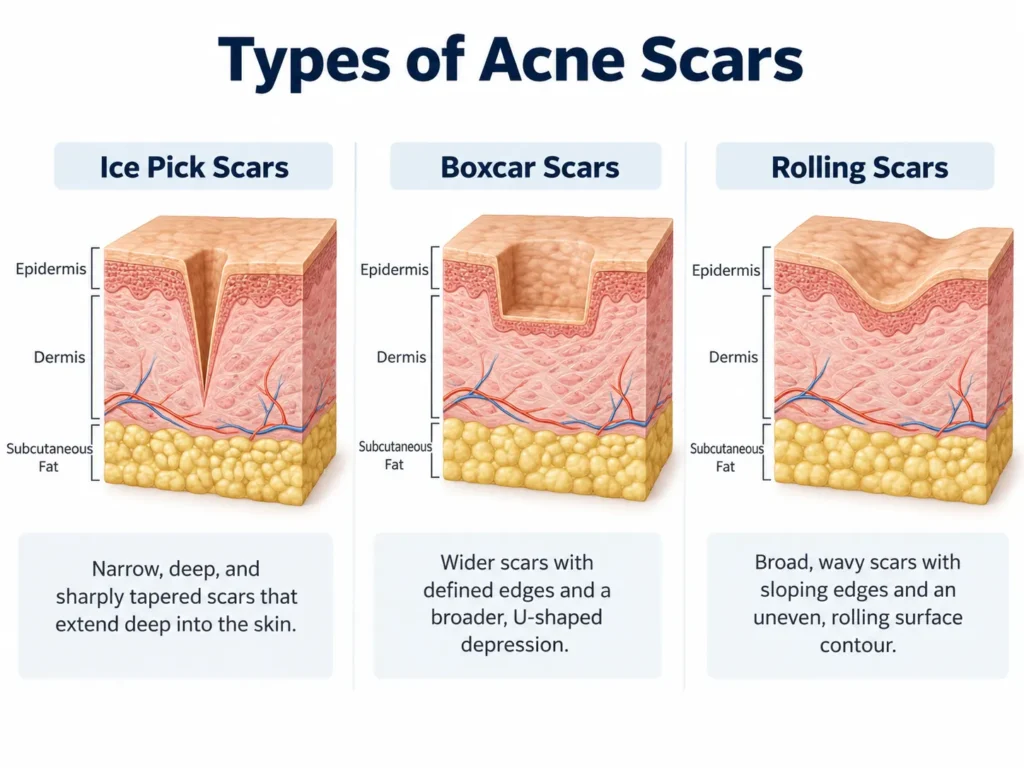
Atrophic acne scars result from aberrant dermal collagen repair after inflammatory acne and account for 80% to 90% of acne scars. They are subclassified by width, depth, and 3-dimensional architecture:
- Ice-pick scars (60%-70%) are narrow (<2 mm), sharply demarcated, V-shaped tracts extending into the deep dermis or subcutis. Their depth frequently exceeds the reach of resurfacing devices, so they often require focal techniques such as TCA CROSS or punch excision.
- Boxcar scars (20%-30%) are round-to-oval depressions (1.5-4 mm) with sharp vertical walls and a flat base. Shallow boxcar scars respond well to fractional resurfacing, whereas deep boxcar scars may need punch excision.
- Rolling scars (15%-25%) are wide (>4-5 mm), shallow depressions with sloped edges caused by fibrous tethering of the dermis to the subcutis; subcision is particularly effective, often combined with resurfacing or fillers.
All 4 modalities reviewed here share a final common pathway: controlled dermal injury triggers a wound-healing cascade with neocollagenesis and collagen remodeling. They differ fundamentally in whether the epidermis is ablated (CO₂, Er:YAG), spared mechanically while the dermis is heated (RF microneedling), or spared while the dermis is thermally columnated (nonablative fractional laser). These mechanistic differences drive the trade-off between efficacy and pigmentary and downtime risk that dominates clinical decision-making.
Mechanisms of Action
RF microneedling (microneedle fractional radiofrequency). Insulated or noninsulated microneedles penetrate the dermis and deliver radiofrequency thermal energy to the mid-dermis while largely sparing the epidermis. Because tissue heating depends on electrical resistance rather than melanin absorption, efficacy is independent of skin pigmentation, which is the central safety advantage in skin of color. Reflectance confocal microscopy and 3-dimensional imaging confirm dermal collagen remodeling, restoration of a reticular collagen structure, and significant reduction in scar depth after serial sessions.
Fractional CO₂ laser (10,600 nm). The reference-standard ablative fractional device targets water, creating columns of epidermal and dermal ablation surrounded by a zone of thermal coagulation, with intervening spared skin serving as a healing reservoir. This produces the most aggressive collagen remodeling and the strongest textural change in broad or deep atrophic scars.
Fractional Er:YAG laser (2940 nm). Also ablative and water targeted, but with roughly 10 to 16 times higher water absorption than CO₂, Er:YAG yields more precise, shallower ablation with a thinner zone of residual thermal damage and less lateral heat spread. This generally translates to faster reepithelialization, less pain, and less PIH than CO₂, at the cost of somewhat less deep, collagen-stimulating coagulation. Many Er:YAG systems operate in both a full-field microlaser peel mode and a fractional ablative mode, which can be combined in the same session.
Dual-wavelength nonablative fractional laser (1550 nm + 1927 nm). The 1550-nm erbium-glass wavelength creates microscopic thermal zones of dermal coagulation, and the 1927-nm thulium wavelength targets the more superficial epidermis and papillary dermis, while the stratum corneum and intervening epidermis remain intact; reepithelialization typically occurs within 24 hours. Remodeling is more gradual, favoring minimal downtime over maximal single-session efficacy.
Comparative Efficacy
Fractional CO₂ as the benchmark. A Cochrane review found significant improvement in scar texture and depth with fractional CO₂ and high patient satisfaction, and a network meta-analysis ranked ablative fractional laser highest for scar improvement but also the most painful.
Ablative lasers vs needling-based therapies. A 2026 systematic review and exploratory meta-analysis found that ablative lasers (especially CO₂ and, in some studies, Er:YAG) more often achieved greater improvement in direct comparisons, with a pooled Goodman and Baron estimate significantly favoring CO₂. However, the conventional microneedling subgroup was not statistically significant, heterogeneity was considerable, and needling-based therapies were consistently associated with shorter downtime and fewer pigmentary adverse effects.
CO₂ vs microneedling, including RF microneedling. A 2026 meta-analysis of 17 studies found no statistically significant difference between fractional CO₂ and microneedling in mean scar-score reduction (standardized mean difference, −1.08; 95% CI, −2.48 to 0.32), with very high heterogeneity (I² >90%). CO₂ showed a modest advantage in categorical treatment success (relative risk [RR], 1.10; 95% CI, 1.01-1.20) but a 3-fold higher risk of PIH vs standard microneedling (RR, 3.04; 95% CI, 1.49-6.21); RF microneedling was more painful intraprocedurally than CO₂. A randomized split-face trial likewise found no significant difference in scar reduction between fractional CO₂ and microneedle RF.
Er:YAG vs microneedling and RF microneedling. In a randomized split-face trial (n = 30; 5 monthly sessions), fractional Er:YAG achieved a significantly better response than conventional microneedling (70% vs 30% good-to-excellent improvement; P < .001) with lower pain scores, although microneedling had shorter downtime. By contrast, when RF energy rather than mechanical needling alone was used, a split-face study found nearly identical Goodman and Baron score changes for RF microneedling and Er:YAG (−6.10 vs −6.14; P = .84), with optical coherence tomography confirming increased epidermal and dermal thickness on both sides and RF microneedling better tolerated.
Er:YAG vs CO₂. A 2026 meta-analysis (5 studies, 130 participants) found that erbium-based fractional lasers had a lower probability of >50% response than CO₂ (RR, 0.69; 95% CI, 0.49-0.97), although the effect attenuated when only randomized trials were analyzed (RR, 0.76; 95% CI, 0.54-1.08); CO₂ caused more pain and approximately 3.7 more days of downtime, without a significant difference in PIH.8 In a randomized split-face trial in dark-skinned Asian patients, Er:YAG and CO₂ produced comparable improvement (55% vs 65% of sites with >50% improvement at 6 months; P = .87), with CO₂ causing more discomfort. In a 1-year retrospective study of 254 patients, CO₂ produced greater long-term scar reduction and fewer nonresponders (5.65% vs 16.92%), whereas Er:YAG produced less pain, faster erythema resolution, and far less persistent erythema (0.77% vs 6.45%).
Nonablative fractional photothermolysis. A second-generation 1550-nm fractional laser produced 50% to 75% improvement in most patients (18 of 29) across Fitzpatrick types I through V, with 5 patients exceeding 75% improvement and no posttreatment pigmentary changes, including in types III through V. In a split-face trial, both the 1927-nm thulium laser and the 2940-nm Er:YAG laser improved atrophic acne scarring and were well tolerated. Nonablative fractional resurfacing generally achieves moderate improvement with minimal downtime but is regarded as less potent per session than ablative resurfacing, often requiring more sessions; meaningful scar reduction has been demonstrated in Fitzpatrick IV through VI patients.
Fractional Er:YAG: Where It Fits
Er:YAG occupies the middle of the ablative spectrum: true ablative resurfacing with meaningful remodeling, but with a recovery and tolerability profile closer to the energy-sparing devices than to CO₂. Beyond the head-to-head data above, several findings support this positioning:
- Mode selection matters. In a randomized trial of 90 patients, microlaser peel, fractional ablative, and combined Er:YAG modes were all effective; combined mode was the most effective but had the most adverse effects, while fractional mode offered the best balance, supporting mode selection by scar severity.
- More effective than nonablative alternatives. Fractional Er:YAG outperformed bipolar RF combined with infrared diode laser, with the advantage greatest in boxcar scars, and in a split-face comparison with long-pulsed 1064-nm Nd:YAG, 52.3% of Er:YAG-treated patients improved vs 25%.
- Favorable in darker skin among ablative options. Reported PIH was approximately 3% after 2940-nm Er:YAG vs up to 55.5% after fractional CO₂ in comparable Asian populations, and in 128 Turkish patients with darker skin tones, Er:YAG resurfacing improved texture, scarring, and dyschromia in all patients, with mild to moderate acne flares (11%) as the main adverse effect.
- Best scar fit. Er:YAG is well suited to shallow-to-moderate boxcar, rolling, and mixed atrophic scarring; its shallower thermal profile makes it less effective than CO₂ as monotherapy for deep or resistant scars.
Table 1. Comparative summary of energy-based modalities for atrophic acne scars
| Modality | Mechanism | Relative efficacy (atrophic scars) | Typical downtime | PIH risk | Best candidates | Key evidence |
|---|---|---|---|---|---|---|
| RF microneedling | Dermal RF thermal injury; epidermis spared; melanin independent | Moderate-high; comparable to CO₂ in mean scar reduction, slightly lower categorical success | Short (often 1-3 d) | Low | All skin types, especially Fitzpatrick IV-VI; minimal downtime | 4, 16, 17, 19 |
| Fractional CO₂ laser | Ablative columns (epidermis + dermis) with coagulation | Highest single-modality | Longest (~7-12+ d erythema, crusting) | Highest (up to ~55% in Asian skin) | Deeper or broader rolling and boxcar scars; lighter phototypes (I-III) | 3, 8, 11, 14 |
| Fractional Er:YAG laser | Precise, shallow ablation; thin thermal zone; peel, fractional, or combined modes | High; slightly below CO₂ for >50% response; superior to conventional microneedling; comparable to RF microneedling | Intermediate (several days to ~1 wk) | Low (~3%) | Shallow-moderate boxcar, rolling, mixed scars; phototypes up to IV-V seeking an ablative result | 8, 11, 12, 18, 20 |
| Dual-wavelength nonablative fractional laser (1550/1927 nm) | Microthermal zones of dermal coagulation; epidermis intact | Moderate; gradual, often more sessions | Minimal (reepithelializes in ~24 h) | Low | Mild-moderate scars; downtime averse; Fitzpatrick I-V | 1, 13, 21 |
Abbreviations: PIH, postinflammatory hyperpigmentation; RF, radiofrequency.
Safety and Skin-of-Color Considerations
The dominant safety differentiator is PIH, driven by epidermal thermal and melanocyte injury. Fractional CO₂ carries the highest risk: in Asian patients, PIH has been reported in up to 55.5% at 1 month after treatment (falling to approximately 11% at 6 months), vs roughly 3% with Er:YAG in comparable populations.10 RF microneedling and nonablative fractional devices consistently show lower pigmentary complication rates because the epidermis is spared; a related meta-analysis in striae found significantly lower PIH with fractional microneedle RF than with fractional CO₂ (odds ratio, 0.24; 95% CI, 0.08-0.70).
For Fitzpatrick IV through VI, RF microneedling is frequently the preferred first-line device because its efficacy is melanin independent and its pigmentary safety profile is favorable. When ablative lasers are used in darker skin, conservative parameters (lower energy, lower density, greater pulse spacing, extended treatment intervals, and diligent periprocedural photoprotection) are advised; the 2022 international consensus notes that density, more than fluence, drives PIH risk with fractional resurfacing.
Other adverse effects shared across modalities include transient erythema, edema, crusting, acneiform eruptions, and herpes simplex reactivation; ablative resurfacing additionally carries a rare risk of hypertrophic scarring if density and energy are excessive. Persistent erythema is notably more common after CO₂ than after Er:YAG, whereas intraprocedural pain is generally higher with RF microneedling than with CO₂.
Scar Morphology Considerations
Scar subtype influences response across all modalities. Rolling and boxcar scars generally respond better than ice-pick scars, which are the most recalcitrant to device-based resurfacing. Nonablative 1540/1550-nm resurfacing, for example, produced 52.9% improvement in boxcar, 43.1% in rolling, and only 25.9% in ice-pick scars in one series. RF microneedling has shown particularly good results for boxcar scars in confocal and 3-dimensional imaging studies, and fractional CO₂ produces the greatest improvement among energy devices in deep, V-shaped scars, although even CO₂ frequently requires adjunctive focal treatment. Broader or deeper atrophic scars generally show greater textural change with ablative than nonablative resurfacing.
Table 2. Atrophic scar subtypes and best-fit approaches
| Scar subtype (prevalence) | Architecture | Best-fit device approach | Adjunct often needed | References |
|---|---|---|---|---|
| Ice-pick (60%-70%) | Narrow <2 mm, deep V-shaped | Fractional CO₂ (deepest ablation) | TCA CROSS, punch excision | 2, 10, 26 |
| Boxcar (20%-30%) | 1.5-4 mm, sharp vertical walls | Ablative Er:YAG or CO₂; RF microneedling | Punch excision (deep) | 6, 11, 22 |
| Rolling (15%-25%) | >4-5 mm, sloped, tethered | RF microneedling; fractional laser, including Er:YAG | Subcision ± filler | 1, 2, 26 |
Combination Therapy
Combination approaches frequently outperform single-modality treatment. A 2026 Bayesian network meta-analysis of 56 randomized clinical trials found fractional CO₂ plus subcision or platelet-rich plasma (PRP) the most consistently beneficial strategy for moderate to severe atrophic scars. A meta-analysis of 13 randomized clinical trials (672 cases) found CO₂ plus PRP superior to CO₂ alone for >50% improvement (odds ratio [OR], 1.63) and >75% improvement (OR, 2.78), with Er:YAG plus PRP also superior for >75% improvement (OR, 3.45) and higher satisfaction with both lasers. Recombinant human epidermal growth factor added to fractional CO₂ reduced scores on the Échelle d’Évaluation Clinique des Cicatrices d’Acné by an additional 11.14 points while accelerating wound healing and reducing PIH risk. Microneedling combined with chemical peels or PRP ranked highest in a network meta-analysis of microneedling-based strategies, and combining Er:YAG microlaser peel and fractional modes in a single session increased efficacy at the cost of more adverse effects.
Clinical Decision Framework
- Maximize efficacy, lighter skin, downtime acceptable: fractional CO₂ laser (± PRP or epidermal growth factor) or fractional Er:YAG.
- Darker skin (Fitzpatrick IV-VI) or low PIH tolerance: RF microneedling first line; Er:YAG with conservative settings as the preferred ablative alternative.
- Ablative-level improvement with limited downtime: fractional Er:YAG, alone or paired with RF microneedling to combine surface resurfacing with deeper dermal remodeling.
- Minimal downtime required: dual-wavelength nonablative fractional laser or RF microneedling, accepting more sessions.
- Deep rolling or boxcar scars: ablative fractional lasers tend to give the strongest textural change; RF microneedling is a close, gentler alternative; add subcision for tethered rolling scars.
- Ice-pick scars: combine any primary resurfacing device with focal techniques (TCA CROSS, punch excision or elevation).
Clinical Perspective
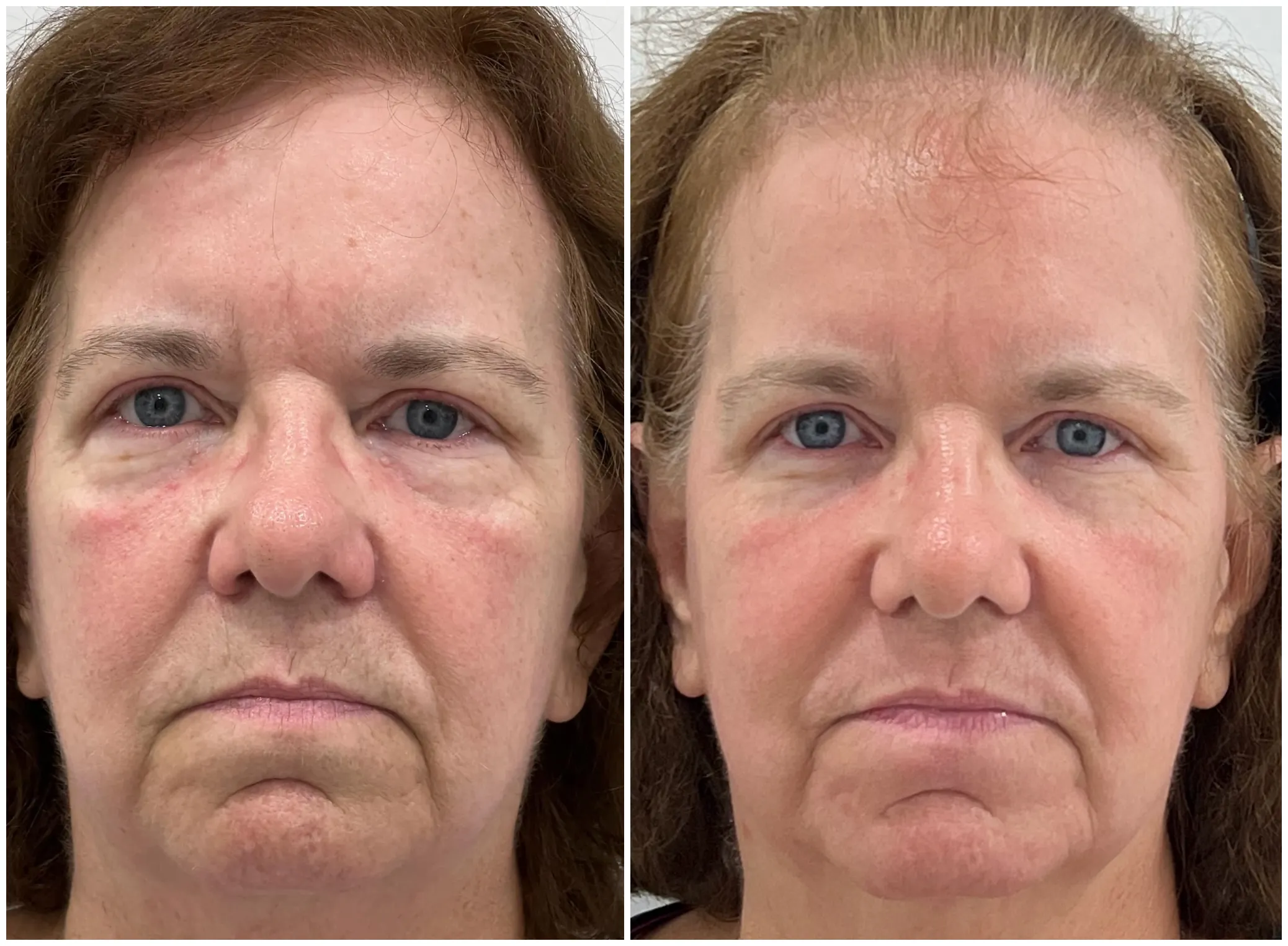
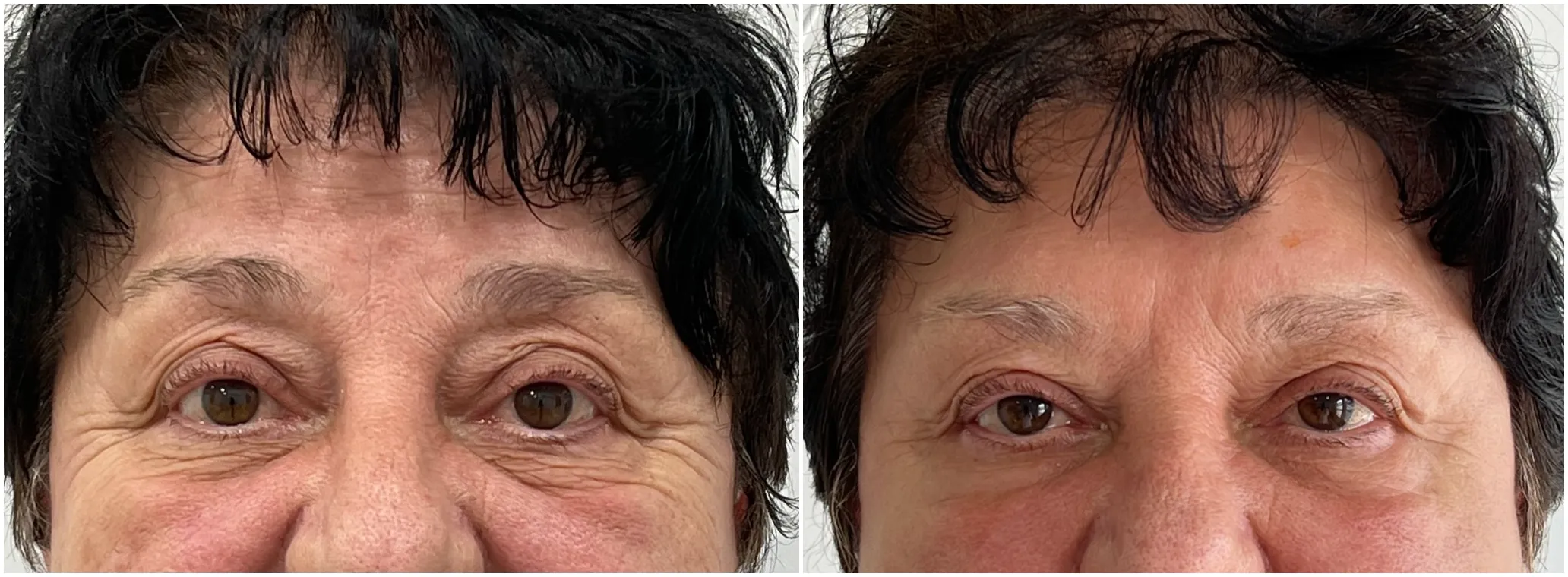
In my practice at REJUVA Dermatology & Vein Center in Venice, Florida, fractional Er:YAG is typically delivered as a series of 3 sessions with downtime of only a few days, and it is usually combined with RF microneedling. This pairing reflects the evidence above: Er:YAG provides precise ablative resurfacing of the scar surface with a favorable pigmentary profile, while RF microneedling adds melanin-independent dermal remodeling that reaches the deeper components of boxcar and rolling scars. Patients with deep ice-pick scars or tethered rolling scars receive targeted adjuncts such as TCA CROSS, punch techniques, or subcision as needed.
Limitations of the Evidence
The comparative literature is characterized by small sample sizes, split-face designs, heterogeneous outcome scales (Goodman and Baron, Échelle d’Évaluation Clinique des Cicatrices d’Acné), variable device parameters, and very high statistical heterogeneity (I² frequently >90%). Pooled estimates favoring ablative lasers are sensitive to individual studies, and “microneedling” encompasses both conventional mechanical microneedling and RF microneedling, which differ in potency. No trial directly compares all 4 modalities, and most data derive from facial rather than truncal scars. The hierarchy presented here is therefore a guide rather than a fixed ranking and should be applied with attention to individual patient and scar characteristics.
Conclusion
All 4 modalities are effective and safe for atrophic acne scars, and no single device is optimal for every patient. Fractional CO₂ offers the greatest single-modality efficacy, particularly for deep scars, but carries the most downtime, persistent erythema, and PIH risk. Fractional Er:YAG delivers somewhat lower long-term response rates than CO₂ but with less pain, faster recovery, and a more favorable pigmentary profile, and its adjustable treatment modes make it a strong ablative choice for shallow-to-moderate boxcar, rolling, and mixed scarring and for darker skin types. RF microneedling delivers scar reduction comparable to ablative lasers with superior pigmentary safety and short recovery, making it especially valuable in skin of color and an effective partner to Er:YAG. Dual-wavelength nonablative fractional laser provides moderate improvement with minimal downtime. Individualized selection, guided by Fitzpatrick type, scar morphology, downtime tolerance, and combination with adjuncts such as PRP, subcision, and focal techniques, yields the best outcomes.
References
- Kim EY, Wong JH, Hussain A, Khachemoune A. Evidence-based management of cutaneous scarring in dermatology part 2: atrophic acne scarring. Arch Dermatol Res. 2023.
- Jin W, Jin Q, Nan M, et al. Atrophic acne scar: a novel 4-step treatment approach using the ultra-pulse fractional CO2 laser. Lasers Med Sci. 2025.
- Abdel Hay R, Shalaby K, Zaher H, et al. Interventions for acne scars. Cochrane Database Syst Rev. 2016;(4):CD011946.
- Tasneem S, Bayrouti A, MacIntyre D, et al. Use of energy-based devices for acne and sequelae in skin of color: a review of efficacy, safety, and practice considerations. Arch Dermatol Res. 2025.
- Kumar N, Kim HM, Nishikawa A, Heo CY, Wu WTL. Effectiveness of radiofrequency microneedling in the treatment of dermatological conditions: a systematic review. Aesthetic Plast Surg. 2026;50(7). PMID:42047762
- Fusano M, Bencini PL. Microneedle fractional radiofrequency for atrophic acne scars: in vivo evaluation of results by 3D analysis and reflectance confocal microscopy. Dermatol Ther. 2022. doi:10.1111/dth.15454
- Li MK, Liu C, Hsu JTS. The use of lasers and light devices in acne management: an update. Am J Clin Dermatol. 2021;22(6).
- Song X, Zhi BW. Comparative efficacy and safety of fractional carbon dioxide and erbium-based fractional lasers for atrophic acne scars: a systematic review and meta-analysis. Lasers Med Sci. 2026.
- Modena DAO, Miranda ACG, Grecco C, et al. Efficacy, safety, and guidelines of application of the fractional ablative laser erbium YAG 2940 nm and non-ablative laser erbium glass in rejuvenation, skin spots, and acne in different skin phototypes: a systematic review. Lasers Med Sci. 2020;35(9).
- Daniele SG, Kim SR, Grada A, et al. Truncal acne and scarring: a comprehensive review of current medical and cosmetic approaches to treatment and patient management. Am J Clin Dermatol. 2023;24(2).
- Xiao C, Zhang J, Peng J. Long-term efficacy and safety of carbon dioxide (CO2) array laser versus erbium-doped yttrium aluminum garnet (Er:YAG) laser for acne scars. Am J Transl Res. 2025;17(8):6391-6402. doi:10.62347/WTMW1778
- Chen L, Wang Y, Jiang L, Fang J, Ren J. Comparison of 2940 nm Er:YAG laser treatment in the microlaser peel, fractional ablative laser, or combined modes for the treatment of concave acne scars. Medicine (Baltimore). 2021;100(28):e26642. doi:10.1097/MD.0000000000026642
- Chrastil B, Glaich AS, Goldberg LH, Friedman PM. Second-generation 1,550-nm fractional photothermolysis for the treatment of acne scars. Dermatol Surg. 2008.
- Li MY, Huang YL, Chen JH, Kang YN, Chen C. Effectiveness and safety of energy-based devices for acne scars: a network meta-analysis of randomized controlled trials. Facial Plast Surg Aesthet Med. 2023.
- Almahzoum K, Alfailakawi W, Alharran AM, et al. Comparative efficacy and safety of needling-based therapies versus ablative fractional lasers for scar management: a systematic review and an exploratory meta-analysis. Photodermatol Photoimmunol Photomed. 2026;42(5).
- Batool A, Abbas MS, Mahin FE, et al. Comparing fractional CO₂ laser and needling-based modalities in facial acne scar treatment: a comprehensive systematic review and meta-analysis. Lasers Med Sci. 2026;41(6).
- Hendel K, Karmisholt K, Hedelund L, Haedersdal M. Fractional CO2-laser versus microneedle radiofrequency for acne scars: a randomized, single treatment, split-face trial. Lasers Surg Med. 2023;55(4).
- Osman MA, Shokeir HA, Fawzy MM. Fractional erbium-doped yttrium aluminum garnet laser versus microneedling in treatment of atrophic acne scars: a randomized split-face clinical study. Dermatol Surg. 2017.
- Emam AAM, Nada HA, Atwa MA, Tawfik NZ. Split-face comparative study of fractional Er:YAG laser versus microneedling radiofrequency in treatment of atrophic acne scars, using optical coherence tomography for assessment. J Cosmet Dermatol. 2022;21(1):227-236. doi:10.1111/jocd.14071
- Manuskiatti W, Iamphonrat T, Wanitphakdeedecha R, Eimpunth S. Comparison of fractional erbium-doped yttrium aluminum garnet and carbon dioxide lasers in resurfacing of atrophic acne scars in Asians. Dermatol Surg. 2013;39(1 pt 1):111-120. doi:10.1111/dsu.12030
- Lu K, Cai S. Efficacy and safety comparison between 1927 nm thulium laser and 2940 nm Er:YAG laser in the treatment of facial atrophic acne scarring: a prospective, simultaneous split-face clinical trial. Lasers Med Sci. 2022.
- Min S, Park SY, Moon J, et al. Comparison between Er:YAG laser and bipolar radiofrequency combined with infrared diode laser for the treatment of acne scars. Lasers Surg Med. 2017;49(4).
- Al-Dhalimi MA, Dahham Z. Split-face clinical comparative study of fractional Er:YAG (2940 nm) laser versus long pulsed Nd:YAG (1064 nm) laser in treatment of atrophic acne scar. J Cosmet Laser Ther. 2021;23(1-2):35-40. doi:10.1080/14764172.2021.1967996
- Haji Mohammadi A, Seirafianpour F, Khosravi M, et al. A systematic review of comparative clinical trials on the efficacy, safety, and patient satisfaction of ablative and non-ablative laser therapies for atrophic, hypertrophic, and keloid scars. Lasers Med Sci. 2025.
- Kutlubay Z, Gokdemir G. Treatment of atrophic facial acne scars with the Er:YAG laser: a Turkish experience. J Cosmet Laser Ther. 2010;12(2):65-72. doi:10.3109/14764171003706141
- Xiang X, Shuai W, Mu Y. Comparative efficacy and safety of fractional CO2 laser and gold microneedling radiofrequency for atrophic acne scars: a systematic review. Skin Res Technol. 2026;32(4).
- Salameh F, Shumaker PR, Goodman GJ, et al. Energy-based devices for the treatment of acne scars: 2022 international consensus recommendations. Lasers Surg Med. 2022.
- Ke R, Cai B, Ni X, et al. Efficacy and safety of non-ablative vs. ablative lasers for acne scarring: a meta-analysis. J Dtsch Dermatol Ges. 2025;23(4).
- Ou Y, An G, Liang J, et al. Laser, microneedling, and combination therapies for moderate to severe acne atrophic scars: a systematic review and network meta-analysis. Aesthetic Plast Surg. 2026. PMID:42429955
- Chen J, Wan Y, Lin Y, Jiang H. Fractional carbon dioxide laser or erbium:yttrium-aluminum-garnet laser assisted by topical application/intradermal injection of platelet-rich plasma for postacne scars. Plast Reconstr Surg. 2021.
- Zhou S, Guo C, Zhai J, Zhang Y. Efficacy and safety of recombinant human epidermal growth factor combined with fractional carbon dioxide laser for facial atrophic acne scars: a systematic review and meta-analysis of randomized trials. Lasers Med Sci. 2026.
- Li H, Jia B, Zhang X. Comparing the efficacy and safety of microneedling and its combination with other treatments in patients with acne scars: a network meta-analysis of randomized controlled trials. Arch Dermatol Res. 2024.